It’s two o’clock in the morning.
The house is quiet.
And then it happens. A sound that’s impossible to ignore at this hour.
Drip.
A few seconds pass.
Drip.
You get up, find a washcloth, throw it under the faucet, and sleepwalk your way back to bed.
The next day, you hardly notice it. Life gets busy, and a slow-dripping faucet doesn’t exactly feel like an emergency. You tell yourself you’ll tighten it later or get around to replacing whatever’s worn out this weekend.
Then July rolls around.
Your sprinkler system is running more often. The kids are home from school. You’re washing extra laundry after trips to the pool, watering the garden, filling pet bowls more frequently, and taking more showers after spending time outside.
Your water bill starts creeping higher, and suddenly that little drip you’ve been ignoring doesn’t seem quite so harmless.
A dripping faucet probably isn’t the biggest reason your utility bill goes up during the summer, but it’s one of the few causes that’s completely avoidable. Over weeks and months, those tiny drops can quietly waste water while putting unnecessary wear on your plumbing fixture.
Here’s why that seemingly minor leak deserves a second look.
A Faucet Doesn’t Usually Start Leaking Overnight
Most dripping faucets don’t suddenly fail.
The leak often begins as a worn washer, aging cartridge, deteriorating O-ring, or mineral buildup that prevents the faucet from sealing completely when it’s turned off. At first, the drip may happen only once every minute or two. It’s easy to ignore because it doesn’t seem like much.
Over time, though, normal use continues to wear those components. The occasional drip becomes more frequent, then eventually turns into a steady leak.
That’s why plumbers often say small plumbing problems are easier to fix than big ones. Catching a worn part early may mean a relatively simple repair. Waiting until internal components are badly worn can make the repair more involved—or, in some cases, make replacing the faucet the more practical option.
The faucet isn’t being stubborn.
It’s simply showing signs that parts inside are reaching the end of their service life.
Why Summer Makes That Drip More Expensive
The faucet isn’t leaking faster because it’s July.
You’re simply using—and paying for—more water overall.
Summer naturally increases water consumption for many Houston households. Lawns and landscaping need more attention during long stretches of heat. Pool owners are topping off water lost to evaporation. Kids spend more time at home, guests visit, and laundry seems to multiply overnight.
When your normal water usage increases, every wasted gallon matters a little more.
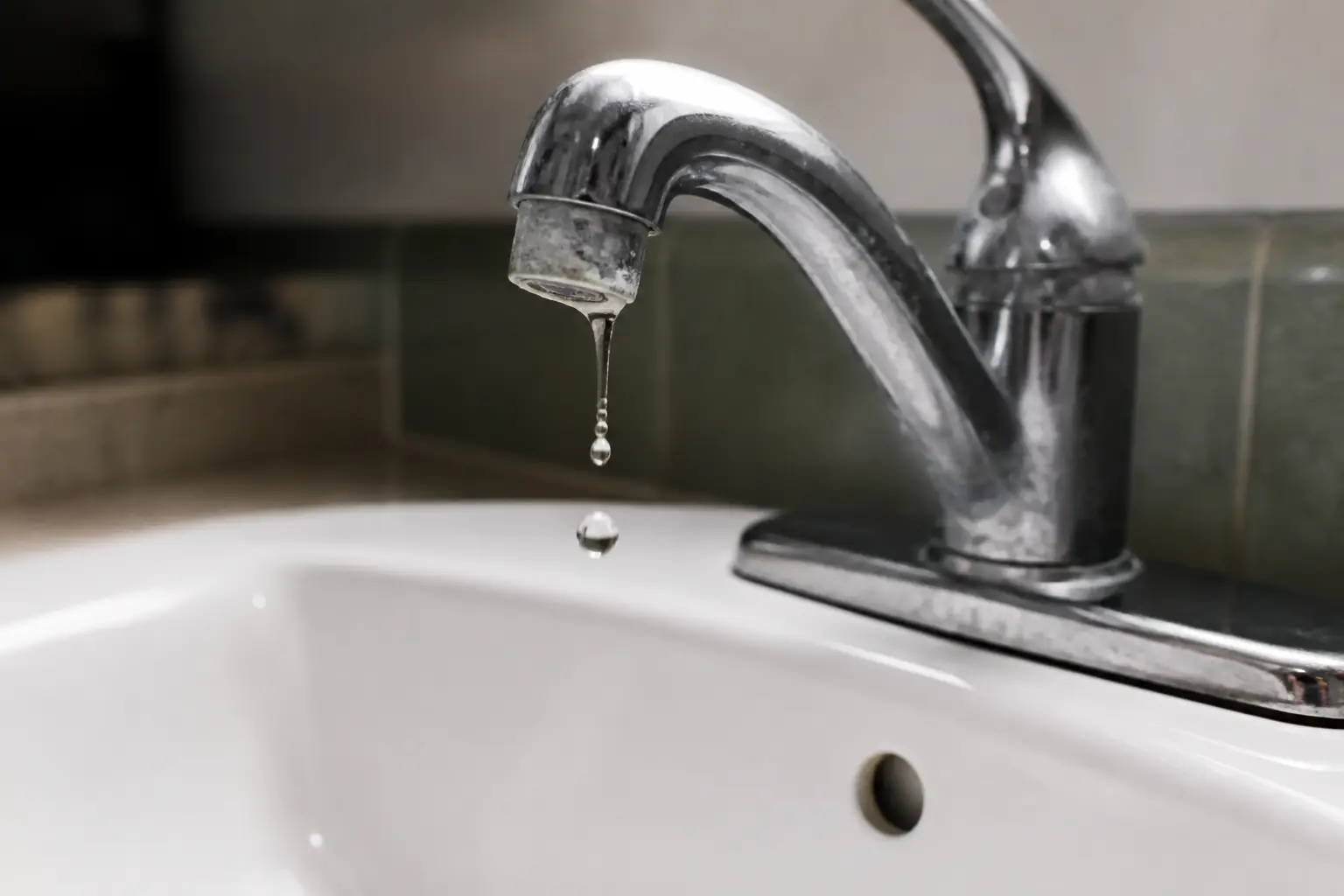
A dripping faucet doesn’t care what time of year it is.
Your water bill does.
That steady drip becomes part of a larger pattern of higher seasonal water use, making it easier to overlook until the monthly bill arrives.
It Isn’t Just About Wasting Water
Most people think of a dripping faucet as a utility bill problem.
Sometimes it’s also a maintenance problem.
Water dripping into a sink can leave mineral deposits and staining over time. If the leak is happening beneath the sink instead of at the spout, slow moisture can damage cabinet floors, encourage mold growth, or cause materials to swell before anyone notices there’s a problem.
Even the faucet itself experiences unnecessary wear when water constantly flows across internal components that should be fully sealed.
None of these issues usually happen overnight.
Like the drip itself, they develop gradually—which is exactly why they’re so easy to overlook.
How Much Water Can One Drip Actually Waste?
One drip doesn’t seem like much.
Neither does two.
But water waste is one of those things that adds up quietly.
A faucet that drips once every second can waste thousands of gallons of water over the course of a year. Depending on your local utility rates, that can translate into real money spent on water that never served a useful purpose.
You probably won’t notice the difference in a single day.
Over several months, however, that small leak can quietly become one of the easiest sources of unnecessary water use to eliminate.
It’s a good reminder that plumbing problems don’t have to be dramatic to be expensive.
When Is It Time to Repair a Dripping Faucet?
The simplest answer is:
As soon as it starts dripping.
If the drip has become noticeable enough that you’re hearing it every day, the components inside the faucet have already begun wearing out.
Repairing a faucet early often helps prevent additional wear to the fixture and reduces the amount of water being wasted over time.
It also gives a plumber the opportunity to inspect the faucet, shut-off valves, and nearby plumbing for any signs of developing problems before they become larger repairs.

Sometimes the fix is straightforward.
Sometimes replacing an older fixture makes more sense.
Either way, addressing the problem early is usually easier than waiting until the leak becomes impossible to ignore.
A Small Repair Today Can Help Prevent Bigger Problems Tomorrow
One of the reasons dripping faucets get pushed down the to-do list is because they rarely stop the house from functioning.
You still have running water.
The sink still works.
Nothing feels urgent.
But plumbing has a way of rewarding small repairs made early.
Whether it’s preventing wasted water, protecting cabinets from hidden moisture, or simply putting an end to that late-night drip…drip…drip, fixing a faucet before it gets worse is usually time well spent.
If you’ve been living with a dripping faucet for weeks—or even months—the licensed plumbers at Nick’s Plumbing & Air Conditioning can identify what’s causing the leak, recommend the most practical repair, and help you stop paying for water that’s literally going down the drain.
Frequently Asked Questions
Is a dripping faucet really wasting that much water?
Yes. Even a slow, steady drip can waste thousands of gallons of water over the course of a year. While you may not notice the difference day to day, the wasted water can add up over time.
Why do faucets start dripping?
Most leaks develop because internal parts such as washers, cartridges, O-rings, or seals wear out with normal use. Hard water mineral buildup can also prevent the faucet from sealing properly.
Should I repair or replace a dripping faucet?
That depends on the age of the fixture, the availability of replacement parts, and the extent of the wear. Many dripping faucets can be repaired, while older or heavily worn fixtures may be better candidates for replacement.
Tired of That Late-Night Drip?
Nick’s Plumbing can find what’s causing the leak, recommend repair or replacement, and help you stop paying for water going down the drain.
Call Now: (713) 868-9907 Schedule Online
Faucet Repair • Leak Repair • Fixture Replacement