When Houston temperatures climb into the upper 90s—and the heat index pushes well past 100 degrees—most homeowners have just one appliance on their mind.
The air conditioner.
It’s working around the clock, your electric bill is climbing, and you’re crossing your fingers hoping it can survive just one more brutal summer.
Meanwhile, your water heater quietly keeps doing its job in the garage, attic, or utility room without much attention.
After all, summer should be the easy season for a water heater…right?
It doesn’t really work out that way.
While warmer incoming water can reduce the amount of energy needed to heat each tankful, Houston’s long, hot summers create other challenges that many homeowners never consider.
High ambient temperatures around the unit, increased household water use, mineral contaminants, and months of continuous operation can all affect how efficiently your water heater performs.
Here’s why your water heater deserves a little attention before the weather finally cools down.
Summer Isn’t Necessarily Easier on Your Water Heater
While it’s true your water heater doesn’t have to work quite as hard to raise the temperature of incoming water during the summer. In January, the groundwater entering your home is much colder than it is in July, which is a huge benefit to the water heater in that it doesn’t need to expend as much energy to add a little more heat before the water reaches your faucet.
That part is good news.
The bad news is this sole benefit to your water heater leads many homeowners to assume that warmer incoming water means the appliance itself is having an easy summer.
Your water heater is still cycling on and off every day to maintain the temperature inside the tank. Every shower, load of laundry, dishwasher cycle, and sink full of dishes starts that process all over again.
For many Houston families, summer actually means the water heater gets used more often—not less. So calling summer a time for your water heater to take a vacation would leave you sorely mistaken.
Houston Heat Doesn’t Stay Outside
Think about where your water heater lives.
If it’s installed in the garage, it spends eight months out of the year surrounded by temperatures that are far higher than the thermostat inside your home is set to. The same problem exists for utility rooms that were built without adequate ventilation.
For water heaters installed in the attic, conditions are far worse, in the place where all of the heat not only rises to, but where direct sunlight assaults your roof, bringing the attic temperature up to a stifling 130° – 140°.
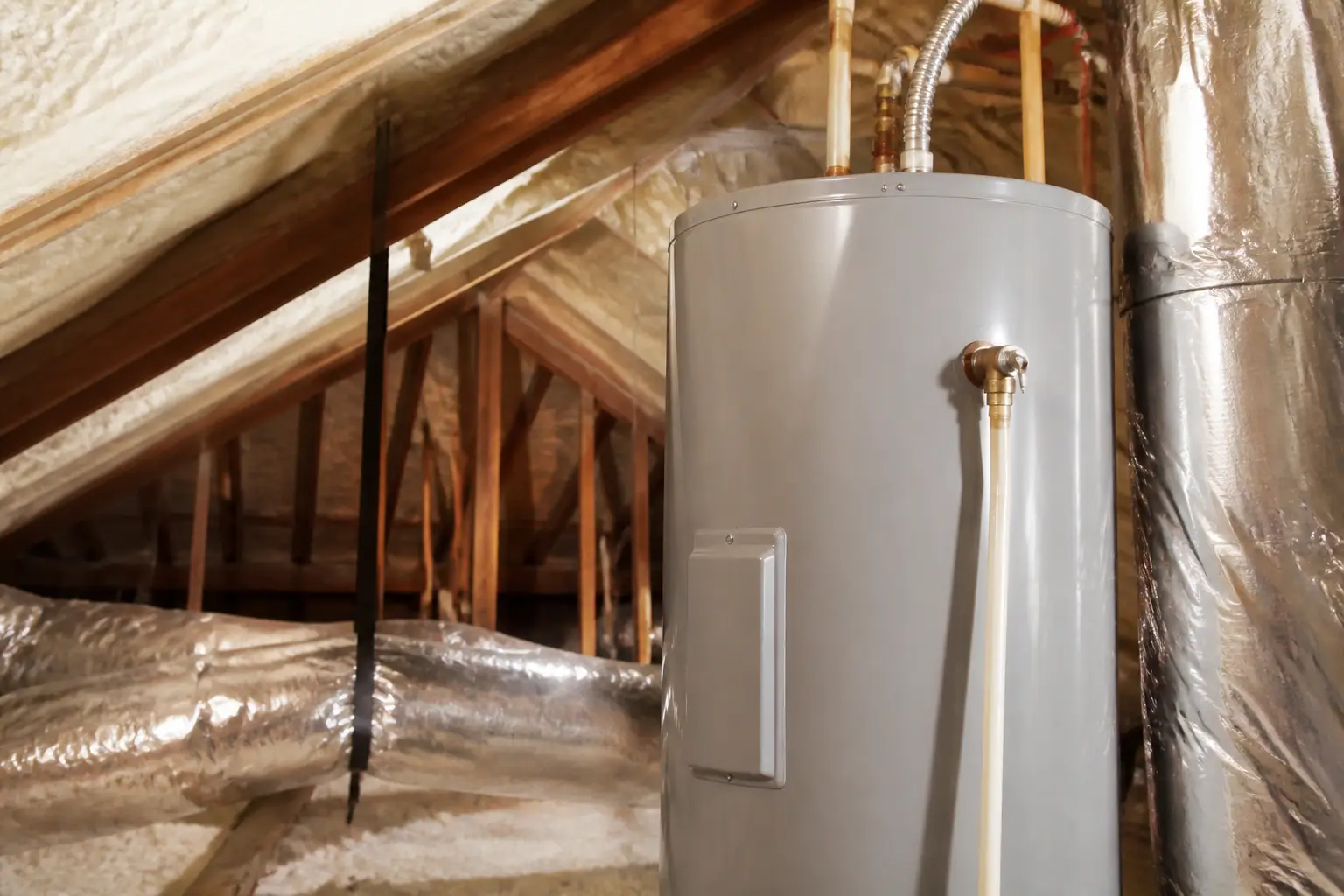
Water heaters are designed to operate in warm environments, but constant exposure to extreme heat places additional stress on every electrical component, controls, insulation, and other parts that work every day of the year.
It’s the same mentality as buying a refrigerator and leaving it in a hot garage. It doesn’t automatically fail because it’s hot; it fails because of months of extreme temperatures and humidity that make it more difficult to provide sufficient cooling. Whether you’re putting a brand-new refrigerator in the garage or putting your current one in that environment, you kind of accept that it’s going to have a shorter life than if it were inside.
Summer Usually Means More Hot Water Than You Think
Summer has a funny way of increasing water usage without homeowners realizing it.
Kids are home from school.
Pool towel piles grow into massive mountains every day.
Guests are coming by for the weekend.
More laundry gets washed. More showers get taken. More dishes end up in the sink after backyard cookouts and family gatherings.
Each time hot water is used, the water heater replaces the hot water with cooler incoming water, starting the process of heating water all over again.
One long shower isn’t going to cause a problem; however, dozens of extra heating cycles over the course of an entire summer add up.
Houston’s Hard Water Never Takes a Vacation
If there’s one thing Houston water heaters never get a break from, it’s hard water.
Tiny mineral particles like calcium and magnesium are heavier than water, so they settle to the bottom of a traditional storage tank over time. As more sediment builds up, it creates a physical barrier between the gas burner or electric heating elements and the water they’re trying to heat.
The result of this sediment buildup will show itself with longer heating times, reduced efficiency, strange popping or rumbling noises, and additional wear on the tank.
Summer doesn’t create sediment, nor does it increase the amount of sediment in the water supply. Heavy hot water use in the summer simply gives it more time to collect and accumulate while the water heater continues working every day.
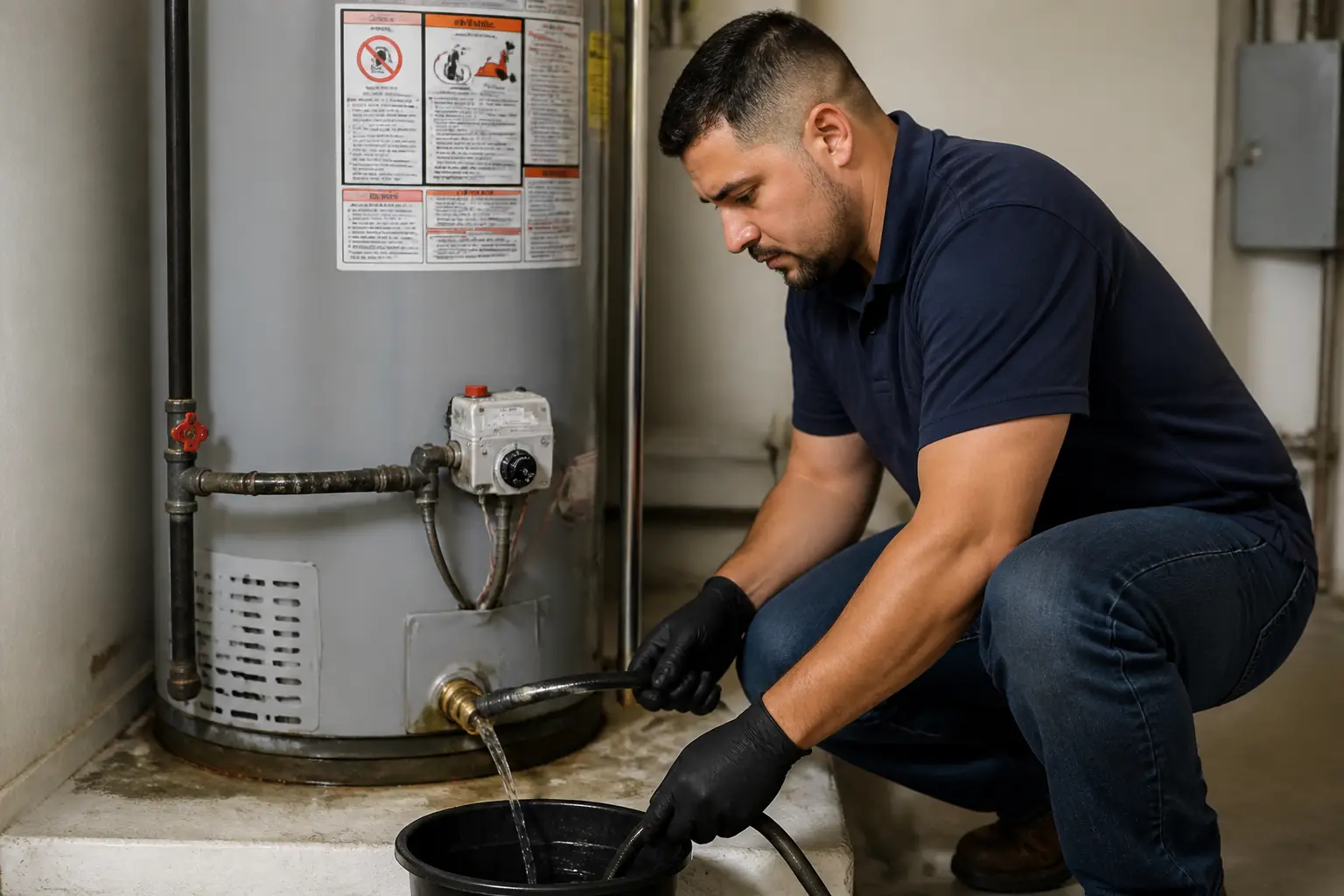
That’s one reason regularly scheduled tank flushes are recommended for many traditional water heaters, especially in areas with hard water.
Small Water Heater Problems Rarely Stay Small
One of the biggest mistakes homeowners make is assuming a water heater issue will just solve itself. But you and I both know that won’t be the case.
A small drip usually becomes a bigger one.
Sediment never disappears on its own.
An aging anode rod won’t suddenly stop the rusting along the seam of the tank. Nor will it stop your hot water from smelling like rotten eggs.
The performance of aging pressure relief valves doesn’t typically improve with age.
Most water heater problems develop gradually before becoming obvious.
Paying attention to unusual noises, inconsistent hot water, rusty water, or moisture around the tank often gives homeowners an opportunity to address smaller issues before they turn into larger repairs, a new water heater installation—or worse, a split and leaking tank.
A Little Attention Now Can Help Avoid Bigger Problems Later
Unlike your air conditioner, your water heater usually doesn’t announce that it’s struggling until something changes.
Maybe the hot water runs out sooner than it used to.
Maybe you start hearing popping sounds during a heating cycle.
Maybe you notice a small puddle around the base of the tank.
Those changes are worth paying attention to, even during the middle of summer.
If your water heater has been making unusual noises, producing inconsistent hot water, or showing signs of wear, the licensed plumbers at Nick’s Plumbing & Air Conditioning can inspect the system, identify the cause, and recommend the right solution before a small issue becomes a much bigger inconvenience.
Frequently Asked Questions
Does a water heater use less energy during the summer?
Generally, yes. Because the incoming water is warmer, the water heater doesn’t have to raise the temperature as much. However, increased hot water use and ongoing maintenance needs can offset some of those savings.
Can hot weather damage a water heater?
Summer heat alone usually doesn’t damage a properly functioning water heater. However, prolonged exposure to high temperatures, combined with heavy use and normal wear, can contribute to problems developing over time.
Should I flush my water heater during the summer?
Many manufacturers recommend periodically flushing traditional tank water heaters to help remove sediment buildup. The right schedule depends on your water quality, the unit’s age, and the manufacturer’s maintenance recommendations.
Is Your Water Heater Showing Summer Stress?
Unusual noises, short hot water, or a puddle at the tank? Nick’s can inspect it and recommend the right fix before a small issue becomes a big one.
Call Now: (713) 868-9907 Schedule Online
Water Heater Maintenance • Repair • Installation