Every winter, Houston homeowners participate in one of our strangest local traditions.
For weeks, it’s 70 degrees outside. Then somebody on television says “freeze warning,” and within three hours every hardware store in town has sold its last faucet cover.
Houston doesn’t experience prolonged freezing weather every winter, but we’ve seen enough hard freezes to know what happens when temperatures stay below freezing longer than our homes and plumbing systems were designed to handle.
Pipes freeze. Fittings crack. Outdoor faucets fail.
And sometimes the real damage doesn’t reveal itself until temperatures rise again and everything begins to thaw.
Fortunately, protecting your plumbing doesn’t require turning your Houston home into an Arctic research station.
It just takes a few steps before everybody else hears the same weather forecast.
Why Houston Pipes Are Vulnerable to Freezing
Homes in colder parts of the country are built for prolonged freezing temperatures.
Houston homes?
We’re considerably more concerned with surviving August.
Depending on the house, water lines may run through attics, exterior walls, garages, crawl spaces, or other areas that don’t receive the same protection as plumbing inside conditioned portions of the home. Outdoor faucets and exposed piping face even greater risk.
When water freezes, it expands. Ice forming inside a vulnerable line can create conditions that put tremendous pressure on the pipe and fittings.
Eventually, something can give.
And unfortunately, the pipe doesn’t always have the courtesy to fail somewhere you can see it.
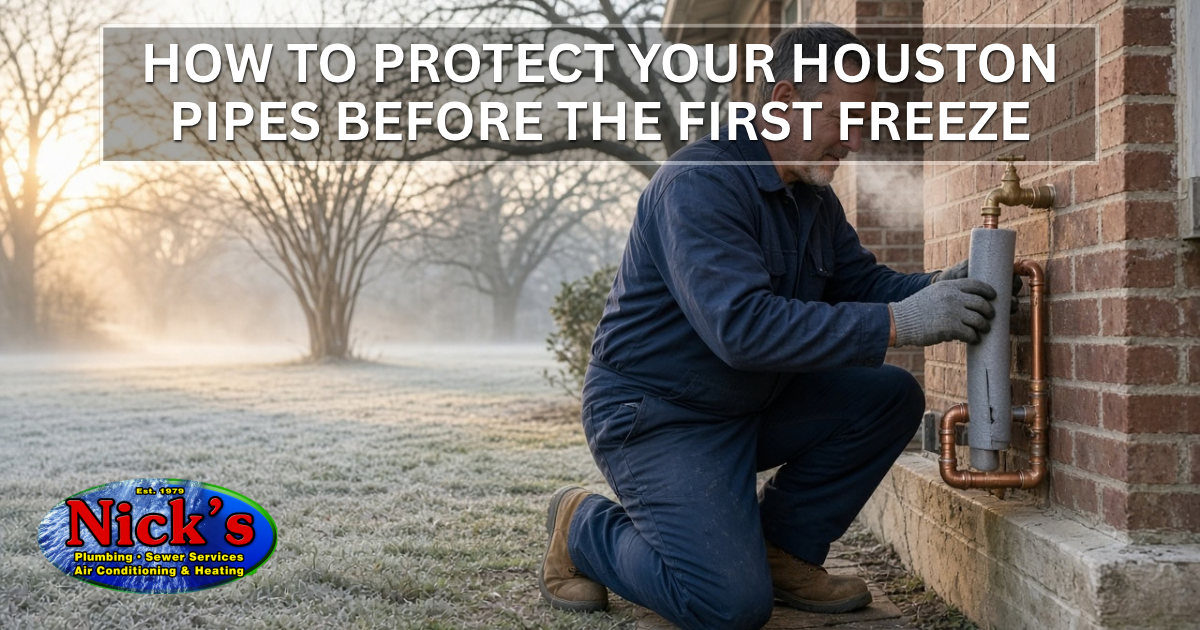
Start With Your Outdoor Faucets
Exterior faucets are among the easiest places to start your freeze preparation.
Disconnect garden hoses first. Leaving a hose attached can trap water where you don’t want it and prevent the faucet assembly from draining properly.
Drain the hose and put it away until warmer weather returns.
Then install insulated covers over exposed outdoor faucets. They’re inexpensive, reusable, and much easier to install at 65 degrees than at 11 p.m., when the temperature is dropping, and you’ve discovered everyone else in Houston bought theirs six hours ago.
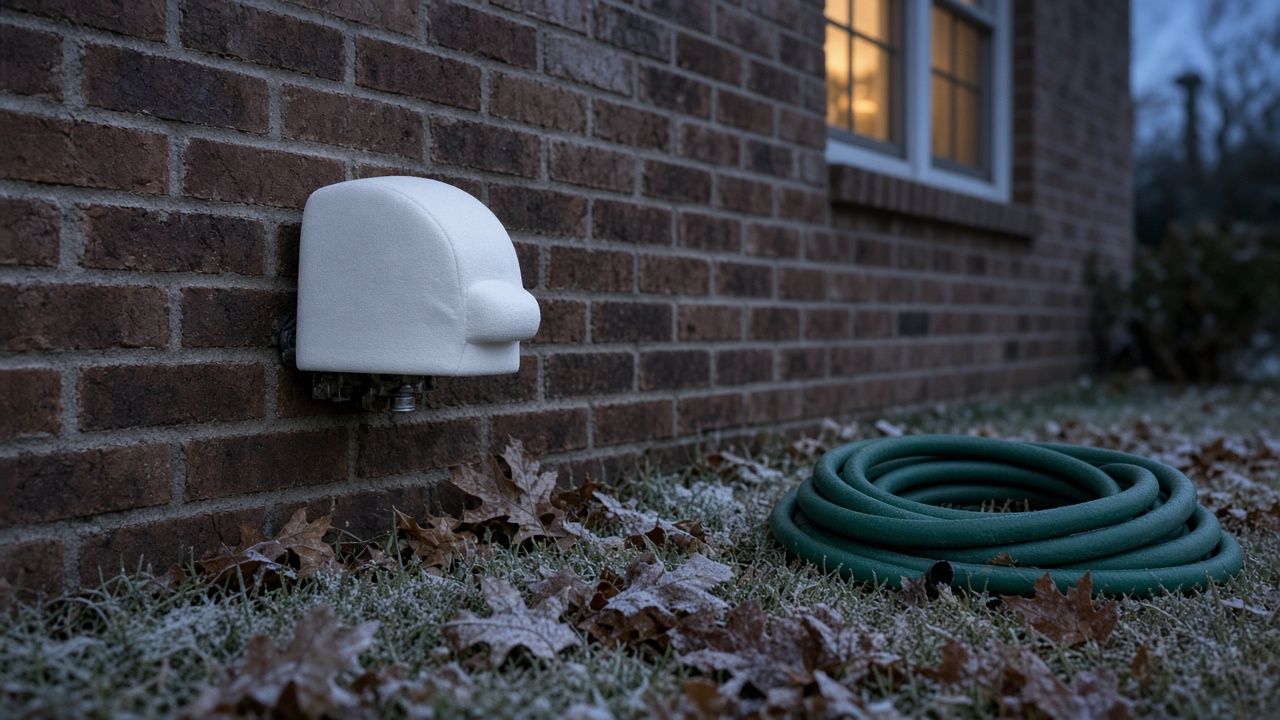
If your home has dedicated shutoff valves for exterior faucets, follow the appropriate procedure for shutting off and draining those lines.
The goal is simple: reduce the amount of water sitting in plumbing exposed to freezing temperatures.
Find the Pipes Houston Winter Can Reach
Not every vulnerable pipe is outside.
Water lines running through garages, crawl spaces, attics, exterior walls, and other poorly insulated areas can experience much colder temperatures than plumbing running through the center of your home.
Inspect any piping you can safely access. Pipe-insulation sleeves can provide additional protection, particularly where cold air can circulate freely around water lines.
Pay attention to drafts, too.
A gap that seems insignificant during summer can direct freezing air toward plumbing during a hard freeze. Moving cold air can pull heat away from a pipe surprisingly quickly.
Houston homeowners spend most of the year trying to keep hot air outside.
For a few nights every winter, we reverse the assignment.
When the Freeze Arrives, Open the Cabinets
Plumbing beneath kitchen and bathroom sinks can be vulnerable when it’s located against an exterior wall.
During freezing weather, open the cabinet doors to allow warmer indoor air to circulate around the pipes.
If you have children or pets, move household chemicals and cleaning products somewhere safe first.
Protecting the plumbing while poisoning the dog would represent a fairly significant failure of the overall winterization plan.
Keeping the house heated matters for the same reason. Even if you’re leaving town, don’t shut the heating system off completely. Indoor heat protects more than the people living there. It also helps protect plumbing running through less-conditioned areas of the house.
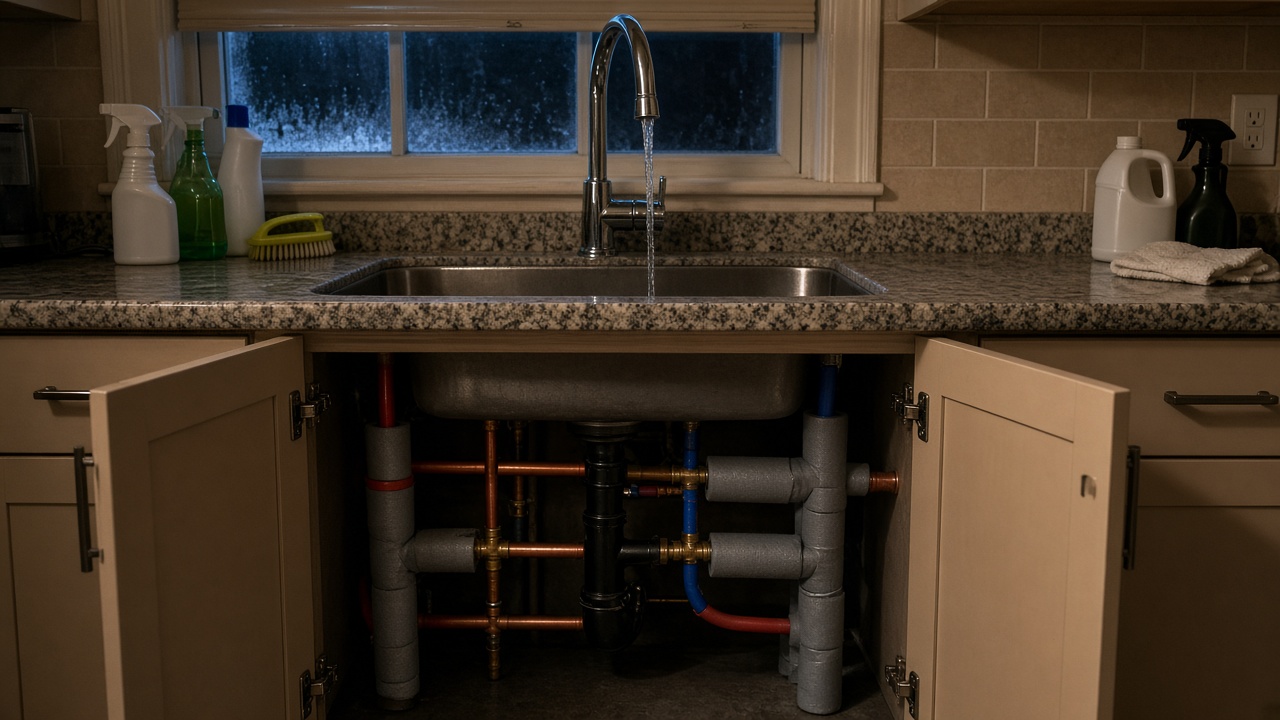
Should You Let Your Faucets Drip?
You’ve probably heard the advice during every Houston freeze:
Let the faucets drip.
There’s a reason.
Letting a small amount of water move through vulnerable hot and cold lines can reduce the chance of freezing during extreme cold.
We’re talking about a trickle.
Which fixtures should run depends on your home’s plumbing layout and where pipes are most exposed. Fixtures served by lines running through exterior walls or other vulnerable areas deserve particular attention.
And remember the hot-water side.
Hot-water pipes can freeze too.
Don’t Shut Off the Water Unless You Know What Happens Next
Turning off the home’s main water supply sounds like an obvious freeze-prevention strategy.
Sometimes it can be useful.
But there’s an important difference between turning off the water and properly draining the plumbing system.
Closing the main valve doesn’t remove water already sitting inside the pipes. If those lines remain full and are exposed to freezing temperatures, the water can still freeze.
A damaged pipe may also remain unnoticed while the water is off, only to reveal itself when the system is repressurized after the thaw.
If you’re winterizing an unoccupied property or intentionally draining the plumbing, you need to drain the system correctly.
Simply closing a valve and leaving town isn’t quite the same thing.
Know Where Your Main Water Shutoff Is
This is one piece of freeze preparation every homeowner should do, whether freezing weather is expected or not.
Find your main water shutoff. Make sure you know how to operate it.
If you need a tool to close it, know where that tool is.
Then make sure the other adults in the house know all of the above.
If a pipe bursts, you don’t want to spend the first five minutes of the emergency searching the yard while water pours through the ceiling.
Knowing where the shutoff is costs nothing.
Not knowing can become remarkably expensive.
Houston Reality Check: The Thaw Can Be Worse Than the Freeze
A frozen pipe doesn’t necessarily start spraying water immediately.
Ice can temporarily block water from escaping through a crack or damaged fitting.
Then Houston warms up.
The ice melts.
Pressure returns.
Suddenly, the pipe that looked perfectly fine during the freeze is leaking into a wall, attic, ceiling, or cabinet.
That’s why homeowners should pay close attention to their plumbing as temperatures rise post-freeze.
Look beneath sinks and around water heaters. Watch for damp drywall, ceiling stains, puddles, reduced water pressure, or unexplained running-water sounds. Smart leak detection can also give you a head start on water damage you can’t see.
If you shut off your water during the freeze, restore it carefully and watch the system as it repressurizes.
If a Pipe Freezes, Leave the Torch Alone
If you turn on a faucet after a freeze and little or no water comes out, part of the supply line may be frozen.
Don’t use an open flame.
No propane torch.
No blowtorch.
Besides the obvious fire risk, concentrated heat can damage piping and surrounding materials.
If the frozen section is accessible, you can sometimes use gentle heat to thaw frozen pipes gradually. If you can’t locate the freeze, can’t safely access the pipe, or suspect it has already cracked, call a plumber.
The objective is to restore water flow.
Not give the fire department something to do.
Don’t Forget the Plumbing Outside the House
Outdoor faucets aren’t the only equipment exposed to freezing weather.
Irrigation backflow preventers, exposed sprinkler components, pool equipment, and other outdoor water systems can contain water that becomes vulnerable during a hard freeze.
Preparation varies depending on how those systems were installed, so follow the manufacturer’s instructions or have unfamiliar equipment professionally winterized.
Water heaters and connected piping in garages, attics, or exterior enclosures also deserve attention.
Don’t randomly drain equipment or shut things off without understanding the proper procedure. For example, an electric water heater can be damaged if heating elements are energized while the tank isn’t full.
There’s a meaningful difference between winterizing the plumbing and turning things off at random and hoping for the best.
Prepare Before the Weather Channel Starts Yelling
Protecting Houston pipes from freezing isn’t particularly complicated.
Disconnect the hoses. Cover outdoor faucets. Insulate vulnerable pipes. Open cabinets during freezing weather. Keep the house heated. Let appropriate faucets trickle during severe cold. Know where the main water shutoff is.
Most importantly, pay attention when everything begins thawing again.
And don’t wait until the temperature is already 31 degrees to start looking for pipe insulation at a hardware store filled with 400 people who just had exactly the same idea.
Houston may spend most of October pretending summer isn’t over.
Winter will eventually get its turn.
If you’re concerned about exposed plumbing or want your home’s plumbing system inspected before freezing weather arrives, the licensed plumbers at Nick’s can help identify vulnerable areas and handle any plumbing repair before cold weather puts them to the test.
Free estimates are available for qualifying work; our 90-day warranty backs every repair, and you can call (713) 868-9907 to schedule plumbing service.
Frequently Asked Questions
At what temperature should Houston homeowners worry about frozen pipes?
Water freezes at 32°F, but the risk to household plumbing depends on how long temperatures remain below freezing, pipe location, insulation, wind exposure, and other conditions. Exposed or poorly protected piping faces greater risk during prolonged freezing weather.
Should I drip both hot and cold water during a freeze?
Vulnerable hot and cold supply lines can both freeze. Allowing a small trickle through appropriate fixtures can keep water moving, but which faucets should run depends on your home’s plumbing layout and exposure.
Should I turn off my water during a Houston freeze?
Not automatically. Turning off the main valve doesn’t remove water already inside the plumbing. If a property needs to be fully winterized, the plumbing system should be properly drained rather than simply shut off.
Get Your Pipes Ready Before the First Freeze
Nick’s licensed plumbers can find vulnerable pipes, fix problems early, and help after a freeze if something gives.
Call Now: (713) 868-9907 Schedule Online
Freeze Prep • Pipe Repair • Leak Detection