October brings Houston neighborhoods a familiar collection of spooky sights.
Skeletons hanging from trees? Check.
Giant inflatable spiders on front lawns? Got ’em.
Foam tombstones with disco lights? Right here.
The ten-foot-tall demon lurking around behind somebody’s oak tree, that you don’t notice until it lights up, screams, and lunges at you? OK, that might be a bit much.
Despite all the decorations and the joy of the trick-or-treaters, you’ll be surprised to learn that some of the scariest things around your house in October have nothing to do with jack-o’-lanterns, “Scream” masks, or goblins.
It’s the crud that’s currently living rent-free in your drain pipes and sewer lines.
Think about it. Cooking grease, decomposing food, soap residue, unflushable wipes, clumps of hair the size of a fat squirrel, and the occasional colony of tree roots quietly accumulate in your plumbing. Most of the time, you don’t see any of it. You just turn on the faucet, watch the water disappear, and assume everything is fine. Which it is.
Until it isn’t.
Fall plumbing maintenance helps Houston homeowners address drain pipe and sewer line buildup, investigate recurring clogs, and identify potential sewer line problems before they become more disruptive.
Is October scientifically better for a hydro-jet drain cleaning than September or November? Not particularly. But it’s a convenient time to check on plumbing that’s been working hard all summer, especially before the holidays bring more cooking, guests, and bathroom traffic.
So, in the spirit of the approaching Halloween holiday, let’s look at the kind of scary stuff that could be hiding down there.
The Horror Show In Your Kitchen Drain
The kitchen sink and garbage disposal are two of the hardest-working appliances in your home, and we thank them by feeding them everything they shouldn’t get.
Cooking grease, oils, food scraps, coffee grounds, rice, pasta, and other non-food debris accumulate along the interior walls of drainpipes. Even if cooking grease goes down as a warm liquid, it cools, coagulates, and clings to pipe surfaces farther down the line. Over time, that buildup narrows the available passage for wastewater.
Then more food particles get caught.
Then more grease.
The garbage disposal doesn’t make the situation disappear, either. It grinds food into smaller particles, but those particles still have to travel through the drain system.
Not everything that fits through the disposal is going to be friendly to your plumbing.
A professional drain cleaning can remove accumulated material and restore flow when buildup is causing the restriction.
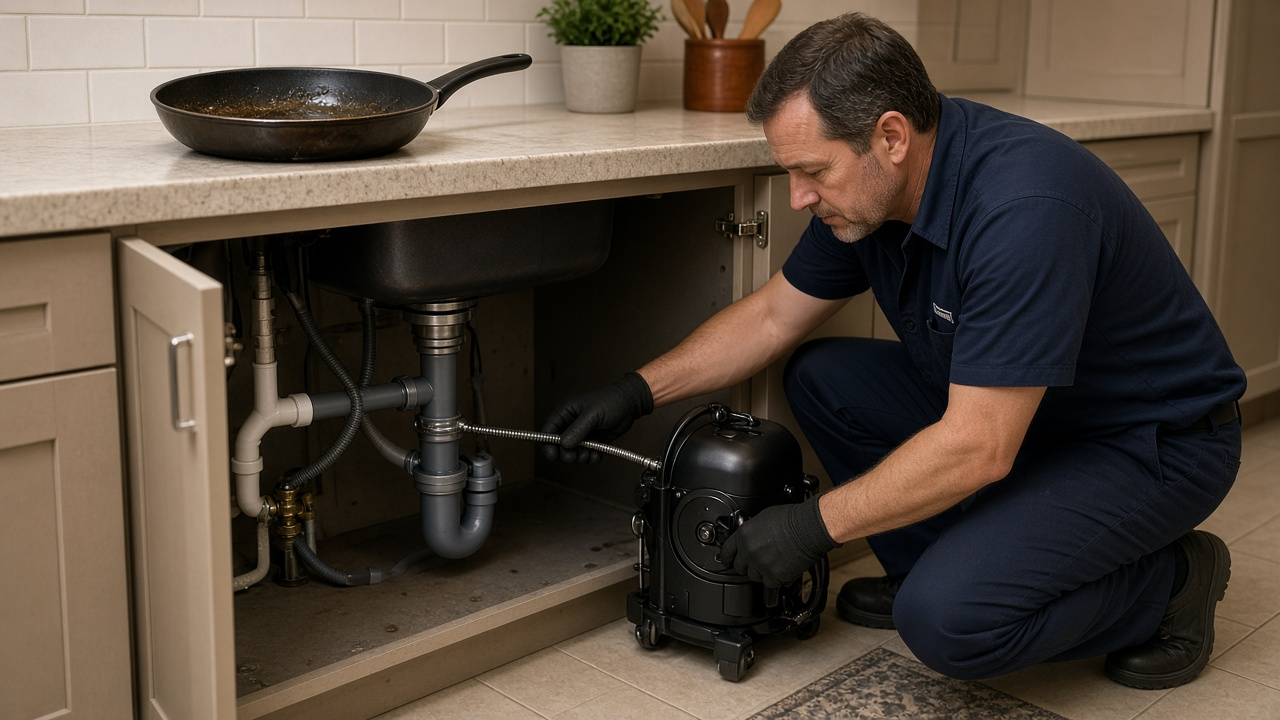
October is a sensible time to address a sluggish kitchen drain before Thanksgiving turns that same sink into the house’s busiest intersection.
The Bathroom Drain: Where Hair Goes to Become a Wet, Sticky P-Trap Clog
If you’ve ever pulled a clog out of a shower drain, you already know that horror movies have nothing on household plumbing.
Hair is usually the starting point.
Individual strands catch on drain components, pipe imperfections, or existing residue. Soap scum, skin oils, and other material gradually collect around them.
What began as a few innocent hairs can eventually become a visually dense, nasally unpleasant mass that obstructs a drain pipe.
Bathroom drain clogs typically develop gradually. You might notice water pooling around your feet during a shower or hear the drain gurgling after the water finally disappears.
Just unscrewing the drain covers and removing visible hair can help prevent some of these problems. If slow drainage keeps returning, the obstruction may reach farther into the drain line than a homeowner can physically reach.
That’s when professional cleaning becomes worth considering.
What’s That Smell? Something Wicked This Way Comes.
Sometimes your nose notices a drain problem before your eyes do.
An unpleasant smell coming from a sink, shower, or floor drain may result from decomposing organic material, bacterial buildup, or a plumbing trap that has lost its water seal.
This also means not every drain odor signals a serious sewer problem.
For example, an infrequently used guest bathroom may develop odors if water evaporates from the P-trap. That water normally helps prevent sewer gases from entering the room.
Running water into the fixture may restore the seal.
But persistent odors, especially when accompanied by gurgling, slow drains, or wastewater backups, deserve closer attention.
Those symptoms can point to venting problems, drain obstructions, or sewer line issues.
And while Halloween encourages homeowners to embrace mysterious smells from bubbling cauldrons, your bathroom shouldn’t be the star of the show.
Houston’s Underground Horror: Tree Roots in Sewer Lines
Now we leave the relatively friendly territory of kitchen grease and shower hair to discuss a sewer line’s ambitious archenemy, the simple tree root.
Houston’s long growing season allows trees and shrubs to develop extensive root systems. Those roots naturally seek moisture and can enter underground sewer lines through cracks, separated joints, loose fittings, or other existing openings.
Once inside, roots can continue growing and catch waste like toilet paper and other material moving through the pipe.
Eventually, they may contribute to recurring clogs or wastewater backups.
Older Houston neighborhoods can be particularly vulnerable where aging clay, cast iron, or other sewer piping has deteriorated or developed compromised joints.
But newer homes aren’t automatically immune to underground sewer problems.
Here’s the important distinction: roots usually exploit an existing opening. They don’t necessarily create the original defect.
Removing the roots may restore drainage, but it doesn’t repair the opening that allowed them inside. When the pipe itself is compromised, sewer line replacement is the conversation, not another cleaning.
That’s why understanding the pipe’s condition matters as much as clearing the obstruction.
The Sewer Camera: Houston’s Version of a Horror-Movie Reveal
You know that moment in a horror movie when somebody finally turns on the basement light, and someone screams, and you flinch in your seat?
That’s called a “jump scare”, and their presence isn’t limited to the silver screen.
A sewer camera inspection offers a considerably more useful version of that experience.
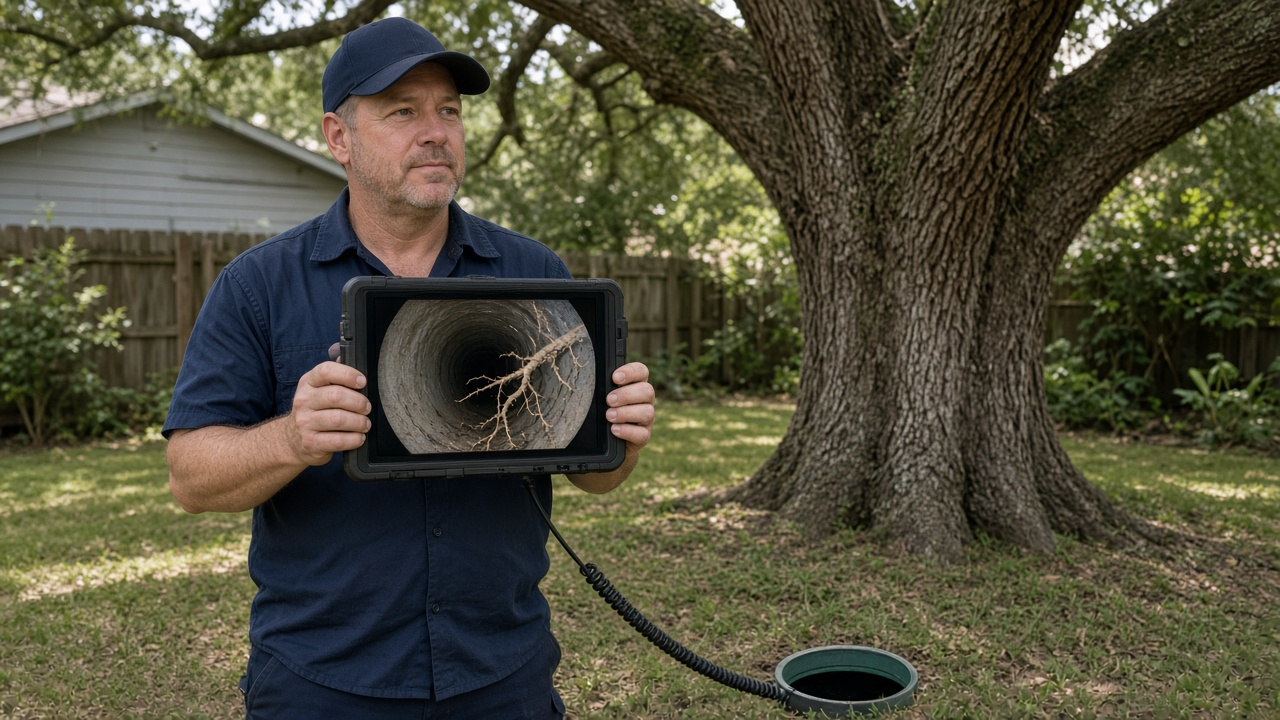
A plumber inserts a specialized waterproof camera into a sewer cleanout, or removes a toilet for better access to inspect the sewer line’s interior.
Depending on visibility and access, the camera can help identify root intrusion, heavy buildup, displaced joints, cracks, standing water, and other visible conditions affecting the line.
It can also help determine where a suspected problem is located. That’s valuable because not every recurring clog has the same cause. A drain clogged with grease requires a different approach than a sewer line with extensive root intrusion or a damaged section of pipe.
A camera inspection doesn’t automatically tell you everything about the plumbing system, and it can’t see through a completely blocked or heavily obscured line. Sometimes cleaning is necessary before a useful inspection can be completed.
But when clogs keep returning, multiple fixtures are affected, or a plumber suspects damage in the main sewer line, a camera inspection can replace guesswork with visual evidence.
Unlike the characters in most horror movies, you’ll have the chance to make an informed decision before digging deeper into the problem.
When a Slow Drain Becomes a Bigger Problem
One slow sink doesn’t automatically mean your entire sewer system is failing. A localized clog may affect only that fixture. But certain symptoms suggest the problem could involve a larger portion of the drainage system.
Watch for multiple fixtures draining slowly, toilets gurgling when nearby plumbing is used, wastewater backing up into a shower or tub, or the same drain repeatedly clogging after cleaning.
These symptoms don’t establish a diagnosis, but they can indicate a restriction or another issue that deserves professional evaluation.
If sewage is actively backing up into the home, stop using the affected plumbing fixtures and arrange service promptly.
That’s one Halloween surprise nobody should have to clean up.
Give Your Drains a Less Frightening Ending
Clogged drains aren’t particularly supernatural. Just natural.
Grease accumulates. Hair gets tangled. Roots find openings. Older pipes develop problems. Eventually, water struggles to get where it’s supposed to go.
And while October isn’t inherently better for drain cleaning than any other month, it’s a convenient reminder to pay attention before holiday plumbing demands arrive.
If your drains are working normally, you don’t necessarily need an inspection simply because Halloween is approaching.
But if you’re dealing with recurring clogs, unexplained odors, slow drainage, or suspected sewer line trouble, it’s worth investigating.
Nick’s Plumbing provides professional drain cleaning and sewer camera inspections for Houston homeowners who want to understand what’s happening inside their plumbing.
Our licensed plumbers can identify the problem and recommend the right solution. We offer free estimates for qualifying work, and repairs are backed by our 90-day warranty.
Call Nick’s today at (713) 868-9907 to schedule your plumbing service.
Because the scariest thing about your drains shouldn’t be discovering what’s inside them.
It should be how long you’ve been pretending that smell was normal.
Frequently Asked Questions
How often should Houston homeowners have their drains professionally cleaned?
No single cleaning schedule applies to every home. Drain condition, pipe age, usage, and recurring problems all matter. Homes experiencing repeated clogs or known sewer line issues may benefit from periodic professional evaluation, while properly functioning drains may not require routine cleaning.
Does a sewer camera inspection clear a clogged drain?
No. A sewer camera is a diagnostic tool, not a cleaning tool. It allows a plumber to examine accessible sections of the sewer line. If heavy buildup or an obstruction blocks the camera’s view, cleaning may be needed before the inspection can provide useful information.
Can tree roots grow into PVC sewer pipes?
Yes. Although PVC piping has advantages over some older materials, roots can enter through damaged sections, failed connections, or improperly sealed joints. A properly installed, intact pipe resists intrusion much better.
Give Your Drains a Less Scary October
Nick’s can clear the buildup and show you what’s in the line before the holidays put it to work.
Call Now: (713) 868-9907 Schedule Online
Drain Cleaning • Sewer Camera Inspections • Hydro Jetting