Imagine coming home on a Thursday night in late November after Thanksgiving dinner at your aunt’s. You’re still carrying full stomachs and are surrounded by warm holiday fuzzies.
Then you open the front door to find your staircase has turned into a water slide.
It looks like while you were gone, one of the upstairs bathroom’s water supply lines failed. As water soaks through the ceiling, your drywall tries in vain to soak up some of it before it reaches the first floor. You can hear the water running, but you can’t figure out where it’s coming from.
Your first instinct is to grab towels.
Your second is to find a bucket.
Neither will help much as long as pressurized water keeps pouring into the house. In this situation, shutting off the main water supply to the entire house is the only step you can take immediately to limit water damage.
Knowing where your main water shutoff valve is, and, just as important, how to operate it, can help limit damage caused by a water emergency and save you valuable minutes when every second matters.
Unfortunately, far too many Houston homeowners only learn about their shutoff valve, and its power to stop water from flooding their homes, after a water leak emergency like the one our hypothetical family faced.
They didn’t take the time to learn where that valve is, or how important it is to know how to operate it, until they’ve sloshed through their own soggy living room, where the consequences are already ankle-deep.
How Bad Can It Be? It’s Just a Little Water.
When water escapes from a broken supply pipe, disconnected supply line, or failed plumbing fixture, your first priority is to stop the flow. Normal residential water pressure in Houston flows into your water meter at 40-80 PSI (pounds per square inch), with 50-60 PSI as the ideal target for most homes. A burst 1/2-inch water supply pipe, pressurized to 60 PSI, is capable of releasing 30-50 gallons per minute.
Or 1,800-3,000 gallons every hour.
Or 43,200-72,000 gallons per day.
If a pipe bursts the day after you leave on a 10-day European vacation, and no one is there to see it, did it really happen?
Oh. It happened. And it kept happening.
But since no one can afford to travel anymore, and all of your children have likely moved back in after college, the empty-house scenario is less likely. And just having more bodies in the house by itself increases the chances of a burst water pipe from excessive use, so, once you’ve finished this blog, pass the water shutoff valve information to your children. This way they have something to forget immediately.
Step One: Locate the Main Shut-Off Valve
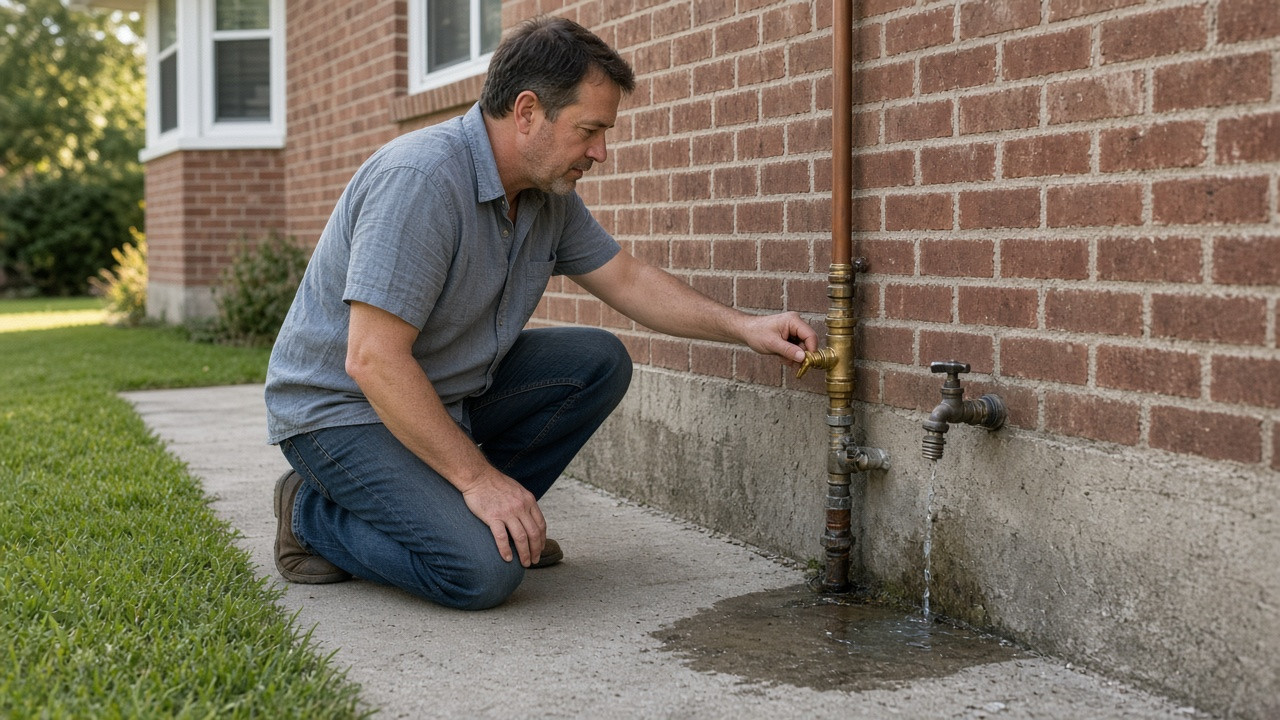
In many Houston-area homes, the main shutoff valve may be near the front of the property, along an exterior wall, in the garage, or wherever the water service line enters the home.
Some homes also have a homeowner-operated valve outside near the house, along with a separate shutoff valve on your water meter.
To make things harder, older homes in historic districts may have a completely different valve arrangement. Start by checking around the home’s exterior, especially near the water meter or where the service line enters the building. Look for an accessible valve connected to the incoming water supply.
Don’t assume the valve is in the same place as your neighbor’s.
If you can safely reach a working shutoff valve near the affected area, close it and see if the flow stops. If you can’t identify the source, the fixture valve doesn’t work, or water is coming from a concealed pipe, you’ll need to shut off the home’s main water supply.
If water levels have reached electrical outlets, appliances, or your electrical panel, stay out of the affected area until it’s safe. Don’t walk through standing water to reach electrical equipment or shutoff valves.
Water damage is expensive. Electrocution damage is permanent.
If you’ve searched for more than a few minutes and still can’t find it, a licensed plumber from Nick’s can help you identify the shutoff valves and explain how to operate them.
Unfortunately, your water will keep running until we can get there.
You’re going to need more towels.
Step Two: Here’s the Valve, Now How Do I Turn It Off?
Once you’ve located the valve, the next step depends on its design.
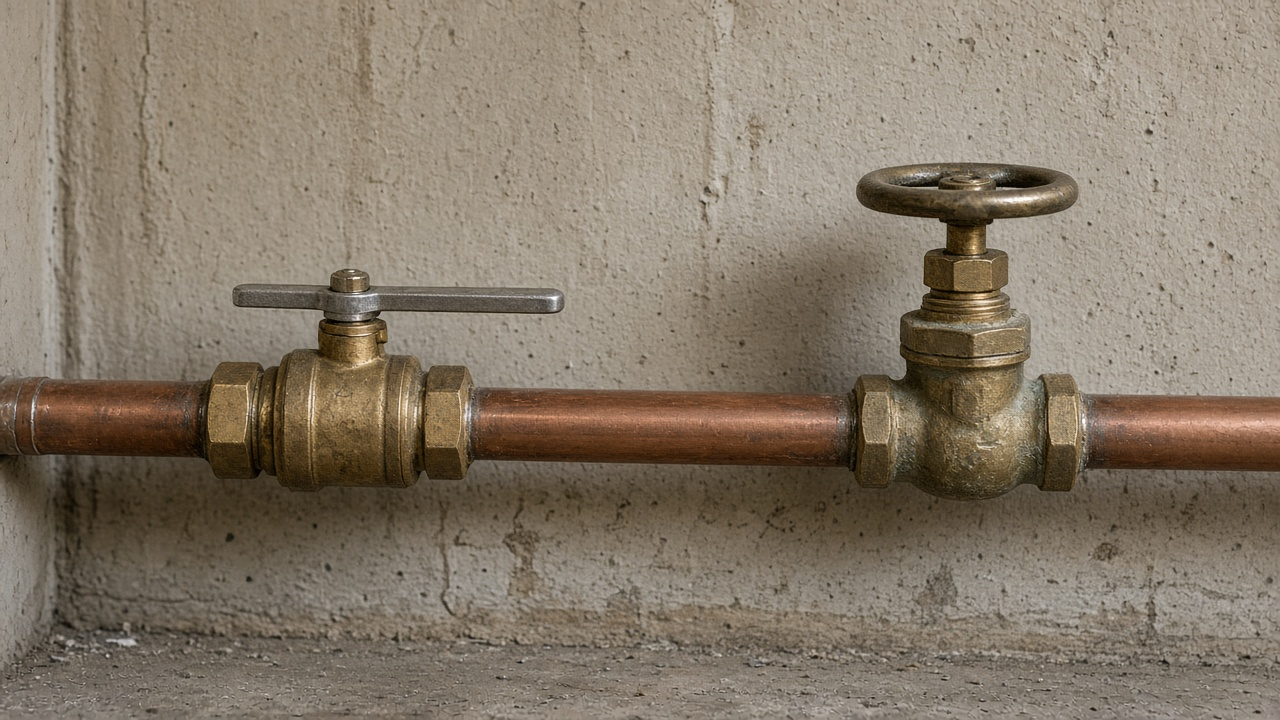
A ball valve typically has a straight lever handle. When the handle runs parallel to the pipe, the valve is generally open. Turn the handle one-quarter turn until it’s perpendicular to the pipe to close it.
A gate valve usually has a round, wheel-shaped handle. Turn the handle clockwise to close it, using steady pressure rather than excessive force. Older gate valves can become difficult to operate, especially when they haven’t been used for years.
If a valve is seized, corroded, leaking, or requires significant force, don’t try to overpower it. Breaking the shutoff valve during an emergency is an exceptionally poor way to improve the situation.
Some homes have different valve configurations, so it’s worth confirming how yours works before you need to know.
What If the Main Shutoff Is at the Water Meter?
Houston-area water meters are often located in underground boxes near the street or property line. Depending on the utility and installation, the meter assembly may include a customer-side shutoff valve or a utility-controlled valve.
The distinction matters.
Some meter valves require a special tool, and utility rules may restrict who can operate certain equipment. Never force a valve, tamper with a sealed meter, or damage utility equipment just to stop the water.
If you don’t have an accessible homeowner shutoff, contact your water utility or a licensed plumber to learn the proper emergency procedure.
Ideally, you should know all of this before your bathroom decides to become a waterfall.
Step Three: Don’t Forget the Smaller Shutoff Valves
Not every plumbing repair requires shutting down the entire house.
Most toilets have a small shutoff valve near the wall or floor behind the fixture. Many sinks have individual hot- and cold-water shutoffs inside the cabinet.
Washing machines typically have dedicated supply valves, too.
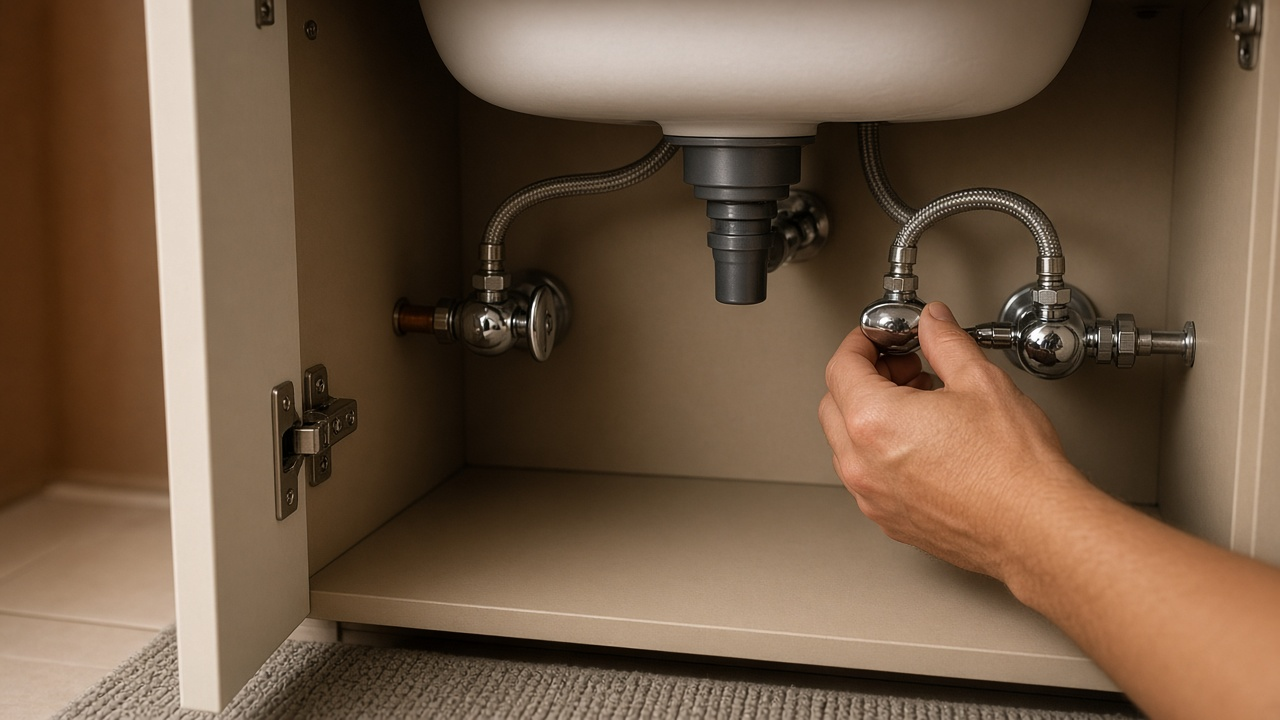
If a toilet supply line breaks and the nearby shutoff is accessible and working, closing that valve may stop the leak without interrupting water service elsewhere.
The same principle applies to certain sink and appliance connections. But if the valve doesn’t stop the water, you can’t safely reach it, or you’re uncertain which line is leaking, move to the main shutoff.
A properly working main shutoff, and someone who knows how to use it, can save your house.
Houston Reality Check: The Water Doesn’t Stay in One Room
Water is remarkably good at finding places you didn’t know existed.
It follows framing, moves through openings around plumbing penetrations, and spreads beneath flooring.
Drywall absorbs moisture. Insulation can become saturated. Wood materials may swell, and flooring adhesives can fail.
If the moisture isn’t addressed promptly, microbial growth can become another concern.
The visible puddle is only part of the problem.
That’s why stopping the water is just the beginning.
Once the supply is shut off, document the damage with photos when it’s safe, move unaffected belongings away from wet areas, and contact a qualified water-damage restoration professional.
Depending on the situation, you may also need to notify your insurance company.
The Five-Minute Plumbing Lesson Every Household Needs
Here’s a remarkably inexpensive way to prepare for a future plumbing emergency.
Find your main water shutoff today.
Then make sure everyone in the household who might need to use it knows where it is.
Show them how it works, and confirm the valve operates properly. If you’re uncertain about its condition, have a plumber inspect it rather than forcing an unfamiliar valve.
Consider labeling the shutoff, keeping necessary tools nearby, and keeping the area accessible.
If you travel frequently, consider whether an automatic water shutoff device or monitored leak-detection system would make sense for your home.
These systems can detect certain leaks and, depending on their design, automatically interrupt the water supply. They’re not a substitute for sound plumbing maintenance, but they can add another layer of protection when no one’s home.
And while you’re showing everyone the main shutoff, identify the smaller valves serving toilets, sinks, and appliances.
The entire lesson takes less time than most families spend deciding what to watch on television.
The Best Time to Find Your Water Shutoff Was Yesterday
You can’t prevent every plumbing failure.
But you can eliminate one completely unnecessary complication: not knowing how to stop the water from flowing into the house.
Find the valve.
Learn how it works.
Make sure other household members know.
If the valve is damaged, inaccessible, or hasn’t operated in years, have it inspected before an emergency forces you to decide.
Nick’s Plumbing & Air Conditioning helps Houston homeowners with emergency plumbing repairs, leaking water lines, damaged fixtures, and other water-supply problems.
Our licensed plumbers can locate and evaluate shutoff valves, repair damaged plumbing, and help homeowners prepare for future emergencies.
We offer free estimates for qualifying work, and our repairs are backed by a 90-day warranty.
Call (713) 868-9907 for plumbing help.
Because when water is pouring through your ceiling, the last thing you want to hear is:
“Does anybody know how to turn this thing off?”
Frequently Asked Questions
Can I shut off the water to just one bathroom?
Sometimes. Individual toilets and sinks usually have fixture shutoff valves, but a bathroom may not have one valve that isolates every fixture. If you can’t safely stop the leak locally, use the home’s main water shutoff.
Should I turn off my main water supply before going on vacation?
For some homes, shutting off the water before an extended absence can reduce the risk of damage from a supply-line failure. However, certain appliances, fire-sprinkler systems, and other equipment may require an uninterrupted water supply. Understand your home’s configuration before shutting anything off.
What if my main water shutoff valve won’t turn?
Don’t force it. An older or corroded valve may seize or break under excessive pressure. Contact a licensed plumber to inspect or replace the valve, and learn the proper backup shutoff procedure for your property.
Find the Valve Before You Need It
Nick’s can locate your shutoff, check that it actually turns, and repair a leaking supply line.
Call Now: (713) 868-9907 Schedule Online
Emergency Plumbing • Water Line Repair • Shutoff Valves