Why Your Pipes Make Noise After Heavy Rain (And What It Means)
Pipes often make noise after heavy rain because changes in soil conditions, water pressure, and plumbing system stress can affect how water moves through your pipes. These noises are usually a sign that something has shifted or changed within your plumbing system.
In Houston and surrounding areas like Katy, Sugar Land, and Pearland, spring storms can cause rapid changes underground that homeowners may not immediately notice—but their plumbing systems do.
Why Pipes Make Noise in the First Place
Pipes make noise when water flow changes suddenly or when pressure inside the system becomes unstable. Common sounds include banging, rattling, whistling, or vibrating.
These noises are often caused by water hammer, loose pipe supports, or pressure fluctuations. Under normal conditions, these issues may be minor or occasional. However, after heavy rain they can become more noticeable.
That’s because external conditions—especially soil and water pressure—directly affect how your plumbing system behaves.
How Heavy Rain Changes Your Plumbing System
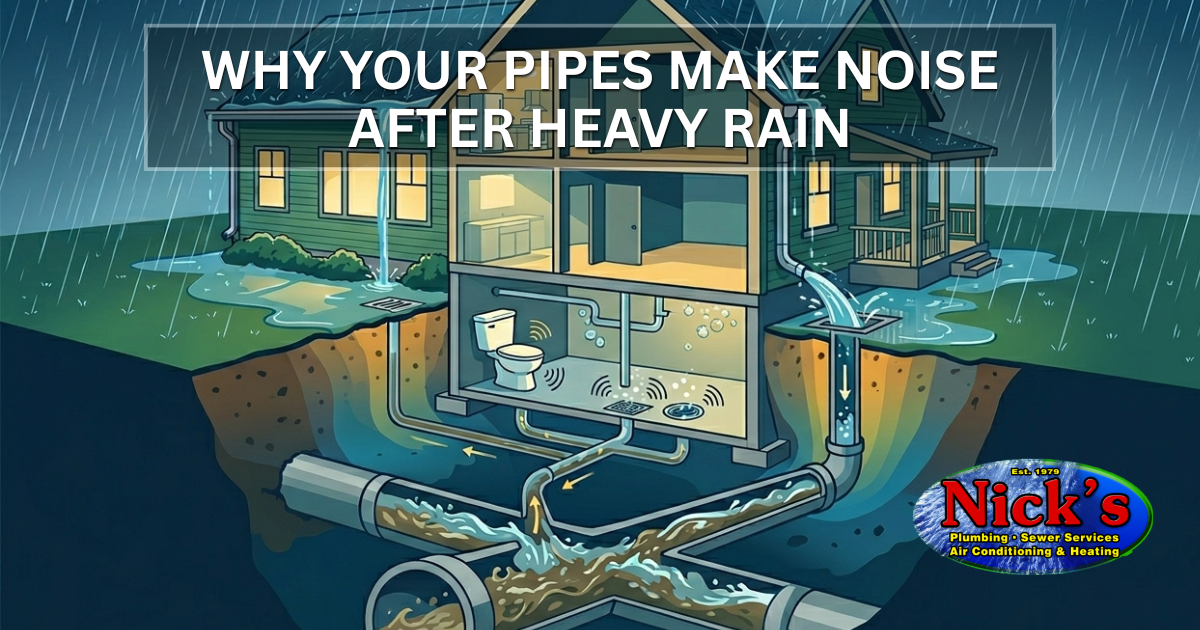
Heavy rain affects plumbing by altering the ground conditions around underground pipes and increasing demand on local water systems. When soil becomes saturated, it can shift slightly, changing how pipes are supported beneath your home.
In Houston’s clay-heavy soil, expansion occurs quickly when water is absorbed. As the soil swells, it can press against pipes or shift the foundation just enough to create stress points.
At the same time, municipal systems may experience increased demand or fluctuations in pressure during and after storms. This combination of ground movement and pressure changes can create the perfect conditions for noisy pipes.
Common Noises You Might Hear After a Storm
Different types of noises can point to different underlying issues. Banging or knocking sounds are often associated with water hammer, which occurs when water flow stops or changes direction suddenly.
Rattling or vibrating pipes may indicate that pipe supports have loosened or shifted slightly due to structural movement. Whistling sounds can be related to pressure imbalances or partially restricted flow within the system.
These noises don’t always mean imminent failure, but they are a signal that something in the system has changed.
When Noisy Pipes Signal a Bigger Problem
Noisy pipes after rain can sometimes indicate more serious plumbing issues, especially if the sounds are new, louder than usual, or happening more frequently. In some cases, the noise is an early warning sign of a developing leak or pressure problem.
If pipes have shifted due to soil movement, connections may begin to weaken. Over time, this can lead to small leaks that worsen if left untreated.
In slab foundation homes, these issues can develop beneath the surface, making them harder to detect without professional equipment. If the noise is accompanied by changes in water pressure, damp areas, or higher water bills, it’s worth investigating further.
Why This Happens More Often in Houston
Houston homes are more likely to experience noise from their pipes after heavy rain due to the region’s soil composition and climate. Located in IECC Climate Zone 2, the area experiences high humidity and intense rainfall, especially in spring.
Clay soils common in Harris County expand significantly when wet and contract when dry. This constant cycle creates movement beneath homes that can affect both foundations and plumbing systems.
With summer temperatures regularly exceeding 95°F and humidity above 70%, these expansion and contraction cycles happen frequently, increasing the likelihood of plumbing stress over time.
How to Quiet Your Pipes Before They Start to Rattle
Homeowners can reduce the risk of noisy pipes by maintaining stable conditions around their plumbing system. Proper drainage helps prevent excessive soil saturation, which reduces movement around underground pipes.
Securing loose pipes inside the home can also help minimize noise caused by vibration or pressure changes. Installing pressure regulators or water hammer arrestors may help stabilize water flow and reduce sudden pressure spikes.
Frequently Asked Questions
Why do my pipes make noise after it rains?
Pipes make noise after rain because soil movement and pressure changes affect how water flows through your plumbing system. This can create vibrations, banging, or rattling sounds.
Is it normal for pipes to make noise after a storm?
Occasional noise can be normal, but new or persistent sounds may indicate a problem such as pressure imbalance, loose pipes, or shifting underground plumbing.
What is water hammer?
Water hammer is a banging noise that occurs when water flow stops suddenly, causing pressure to surge through the pipes.
Can heavy rain damage plumbing pipes?
Yes, heavy rain can shift soil and foundations, which can stress pipes and lead to leaks or structural damage over time.
Should I call a plumber for noisy pipes?
If the noise is new, worsening, or accompanied by other issues such as pressure changes or leaks, a professional inspection is recommended.
When to Call a Plumber
If your pipes are making new or worsening noises after heavy rain, it’s best to have your system inspected before the problem develops into a leak or pipe failure. Plumbing issues related to pressure or movement rarely resolve on their own.
Nick’s Plumbing provides professional inspections and repairs throughout Houston, Katy, Sugar Land, and surrounding areas. Identifying the cause early can prevent more extensive damage and costly repairs.
Hearing New Pipe Noises After a Storm?
We can inspect your system, explain what the sounds mean, and help you fix problems before they grow.
Call Now: (713) 868-9907 Schedule Online
Plumbing Inspections • Leak Detection • Houston Area