Your sewer line just survived another Houston summer.
For months, the pipe carrying wastewater away from your home has dealt with everything Houston could throw at it. Scorching temperatures dried the ground. Periods of heavy rain soaked it again. Tree roots went looking for moisture. Summer cookouts sent more grease and food debris through kitchen drains, while kids home from school meant more showers (hopefully), laundry, toilet flushes, and general abuse of the plumbing system.
Then fall arrives, or as we refer to it in Houston, the period when the weather becomes slightly less offensive, the kids go back to school, and your plumbing finally gets a chance to catch its breath.
It’s also an excellent time to find out what summer may have done underground.
A sewer line camera inspection allows a plumber to see developing problems that haven’t yet caused a complete blockage or backup. And while there’s technically no wrong season to inspect a sewer line, fall offers Houston homeowners a particularly useful window between the punishing heat of summer and the increased demands of the holidays.
Houston Summers Don’t Just Punish Your Air Conditioner
Your HVAC system gets most of the attention when Houston temperatures start climbing.
Meanwhile, several feet underground, your sewer line is having a summer of its own.
Houston sits on expansive clay soil that can shift and move around as the moisture content changes. During prolonged hot, dry weather, moisture evaporates and the soil contracts. When heavy rain finally arrives, that same clay absorbs water and expands again.
Underground plumbing gets caught in the middle.
Over time, repeated soil movement can place stress on sewer lines and their connections. Older clay or cast-iron pipes can be particularly vulnerable, but even newer sewer systems aren’t completely immune to shifting soil.
Pipe joints can become misaligned. Sections can settle, creating low spots commonly called bellies. Existing cracks can grow larger.
None of those problems is enough to stop wastewater from flowing through your sewer line, and that’s one reason they’re so easy to miss.
Fall Lets You See What Summer Left Behind
Think of fall as the morning after the party.
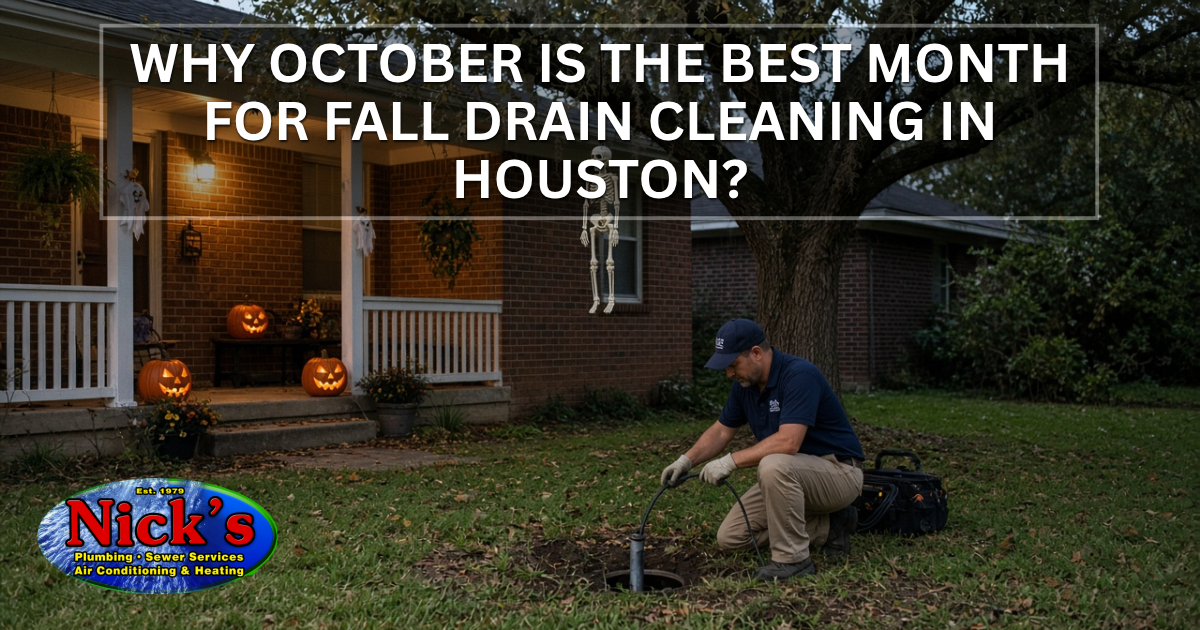
A sewer camera inspection involves sending a small waterproof high-definition camera into the drain and sewer system, giving your plumber a direct look at what is happening inside the pipe in real time.
Depending on the system, an inspection may reveal:
- Cracks or broken sections: Soil movement, age, corrosion, or physical stress can damage the pipe while wastewater continues flowing through it.
- Offset or separated joints: Sections of pipe that have shifted out of alignment can interfere with drainage and create openings for surrounding soil or tree roots.
- Tree-root intrusion: Roots entering through cracks and joints can form surprisingly dense obstructions inside a sewer line.
- Pipe bellies: A sagging section can hold water and waste rather than allowing everything to continue flowing downhill.
- Grease and debris buildup: Months or years of material accumulating along the pipe walls can gradually reduce the amount of open space available for drainage.
- Corrosion and deterioration: Older cast-iron sewer lines can become heavily corroded internally long before a homeowner knows there’s a problem.
The important part isn’t simply seeing that something is wrong.
It’s seeing how wrong it is while you still have time to decide what to do about it.
Tree Roots Have Been Busy All Summer
Houston trees don’t spend summer sitting around admiring themselves.
They’re looking for water.
During extended dry periods, roots spread farther through surrounding soil in search of moisture. Unfortunately, a sewer line can provide exactly what they’re looking for.
A perfectly intact sewer pipe isn’t particularly inviting.
A cracked pipe or separated joint is another story.
Once roots find an opening, they can grow inside the line and begin catching toilet paper, grease, food particles, and other debris passing through it. The result doesn’t necessarily look like a traditional clog. It looks more like someone planted a shrub inside your sewer line.

The roots create the framework.
Everything you flush supplies the building materials. Fall provides an opportunity to discover that intrusion before several more months of growth and debris turn a developing restriction into a complete blockage.
The One Thing Homeowners Usually Get Wrong
A sewer line doesn’t have to be completely clogged to have a problem.
That’s an important distinction, as wastewater can continue to flow past roots and other debris. It’s like we learned in grammar school: “water always finds its way.”
It can flow around an offset joint. It can move through a partially restricted section. It can slowly pass through a pipe belly.
Until it can’t.
Homeowners understandably tend to judge their sewer system by a very simple standard: everything went down the drain today; therefore, everything must be fine.
Unfortunately, your sewer line may have been slowly developing a problem for years while still passing that test. A camera inspection lets you look beyond whether the pipe works today and assess whether something inside it is likely to cause trouble tomorrow.
Pay Attention to What Your Drains Are Telling You
You don’t necessarily need to wait until fall to schedule a sewer camera inspection. If your plumbing is already showing warning signs, the best time is considerably sooner. Pay particular attention to multiple fixtures having issues simultaneously.
One bathroom sink draining slowly may have hair or soap buildup in its individual drain.
But when several drains start slowing down, the toilet starts gurgling, and the bathtub suddenly becomes part of conversations it was never invited to…
…something farther downstream may be restricting the entire system.
Other warning signs include recurring clogs, sewage odors, wastewater backing up into tubs or showers, unexplained wet areas in the yard, unusually green patches of grass, or drain problems that recur shortly after being cleared.
Recurring problems deserve a diagnosis and a proper repair.
Not repeated temporary fixes.
Why Repeated Drain Cleaning Isn’t the Same as Knowing What’s Wrong
If a drain keeps clogging, you know that repeatedly clearing the blockage may restore flow.
For now.
The 2,000-pound elephant in the room is trying to tell you to stop wasting money on drain cleaning products, call Nick’s Plumbing, and do away with the blockage issues altogether.
Unfortunately, you don’t speak Elephant. The elephant doesn’t speak English. And since he’s been here for a while, let’s just say the mess you would normally expect from a 1-ton behemoth is being made. And you just replaced that carpet.
It may seem bold of me to suggest the following, but hear me out.
Let’s assume that most homeowners aren’t prepared for the idea of merely clearing tree roots from a sewer line without any follow-up work to address where infiltration could occur. The cracked joint that allowed them inside turns its “VACANCY” sign back on, and it’s business as usual.
The immediate problem is gone. Existing roots have been removed, most likely by using the hydrojetting process. So, now that the sewer line is clear and normal flow has been restored to your drains, what about the cracks that are now confirmed to exist?
Without some type of intervention from the homeowner, the invitation to those tree roots remains open.
Likewise, clearing accumulated debris doesn’t correct a pipe belly where wastewater continually settles. Removing a blockage doesn’t realign an offset joint or repair deteriorating cast iron.
That’s where the camera earns its keep.
Instead of assuming every recurring blockage is simply another clog, your plumber can inspect the line to determine whether an underlying structural problem is contributing to it.
Sometimes the camera shows a healthy pipe that simply needed cleaning.
That’s useful information too.
Nobody should be disappointed when an inspection finds nothing expensive.
Houston Reality Check
Fall in Houston isn’t exactly autumn in Vermont.
September can still feel like July with slightly better public relations.
But the transition into fall gives homeowners something they rarely have during plumbing emergencies: time.
If a camera inspection discovers root intrusion, a damaged joint, heavy buildup, or a deteriorating section of pipe, you can discuss the appropriate repair without sewage currently rising through the bathtub.
There’s considerable value in making plumbing decisions while your plumbing is still working.
Find the Small Problem While It’s Still Just a Small Problem
There isn’t a secret date on the calendar when every Houston homeowner needs a sewer camera inspection.
If wastewater is already backing up into your home, February is better than waiting until October.
But for preventive inspection, fall makes a lot of sense.
Summer has already shown the sewer line the worst of Houston’s heat, shifting soil, root activity, storms, and heavy household use.
The holidays haven’t arrived yet.
And if the inspection discovers something developing underground, you have an opportunity to deal with it before a slow drain becomes a stopped drain, or a stopped drain becomes something floating across the bathroom floor.

Your sewer line survived another Houston summer.
Fall is a pretty good time to find out how it survived.
If you’ve noticed recurring drain problems or simply want to know the condition of your home’s sewer line, the licensed plumbers at Nick’s Plumbing & Air Conditioning can perform a sewer camera inspection, identify developing problems, and recommend the appropriate next step.
Free estimates are available for qualifying work; our 90-day warranty backs every repair, and you can call (713) 868-9907 to schedule service.
Frequently Asked Questions
Is fall really the best time for a sewer camera inspection?
There’s no single season when sewer lines must be inspected. However, fall can be an excellent time for preventive inspection in Houston because the system has just endured summer heat, soil movement, heavy rain, root activity, and months of increased household use.
How do I know if I need a sewer camera inspection?
Multiple slow drains, recurring clogs, gurgling toilets, sewage odors, wastewater backups, or unusual wet areas in the yard can indicate a larger drain or sewer problem that deserves further investigation.
Can a sewer camera find tree roots?
Yes. A sewer camera can reveal root intrusion inside the pipe and help determine where the roots entered and how significantly they’re restricting the sewer line.
Do I need a sewer camera inspection if my drains are working normally?
Not every home needs frequent camera inspections. However, preventive inspections can be particularly useful for older homes, properties with mature trees, homes with aging sewer materials, or plumbing systems with a history of recurring drain problems.
Ready for a Fall Sewer Camera Inspection?
Nick’s Plumbing can show you what summer left underground before holiday backups force the issue.
Call Now: (713) 868-9907 Schedule Online
Sewer Camera Inspection • Drain Cleaning • Sewer Line Repair