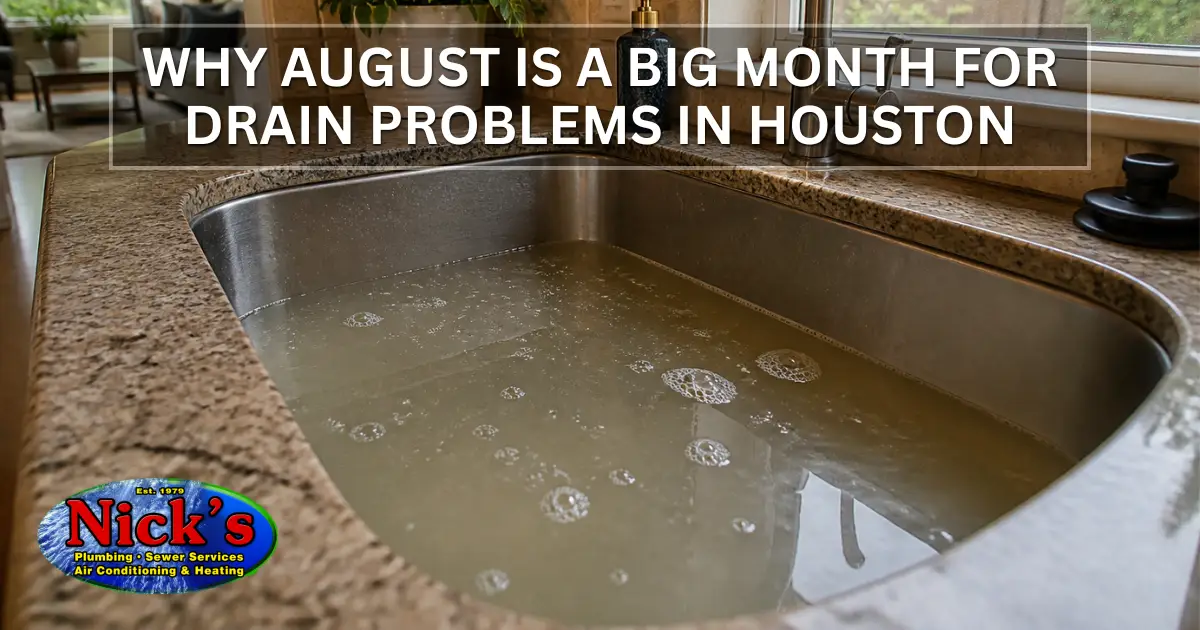
Your kitchen sink didn’t just decide to drain slower today.
It has probably been thinking about it since Memorial Day.
It makes sense, with all the backyard cookouts and family get-togethers, which equals more people in the house, which equals more dishes in the sink. This means more grease and other garbage disposal “no-no’s” are finding their way down the drain, even though everyone swears they cleared their plates into the trash, but really scraped them into the garbage disposal.
Then August arrives.
Suddenly, the sink takes a little longer to empty. When the garbage disposal starts making noises it didn’t make in June. The shower drains more slowly than you remember. Maybe the bathroom sink begins gurgling every time the washing machine drains.
It feels like the plumbing picked the hottest month of the year to rebel.
In reality, August usually isn’t when drain problems begin. It’s when months of sludge buildup finally catches up with your plumbing.
If your drains seem to have a habit of acting up late every summer, here’s how August has earned that reputation.
Summer Has Been Building This Clog Since Memorial Day
Most drain clogs don’t happen overnight.
They’re built one small mistake at a time. A little bacon grease rinsed down the kitchen sink. Soap residue from another load of dishes. Food scraps that made it past the garbage disposal. Hair collecting inside shower drains. Lint from the washing machine.
None of those things seem significant on their own.
But every day throughout the summer, all of them leave behind tiny deposits inside your plumbing. Grease coats the pipe walls. Soap scum sticks to that grease. Food particles cling to both. Before long, what started as a smooth drain pipe begins narrowing from the outside walls.
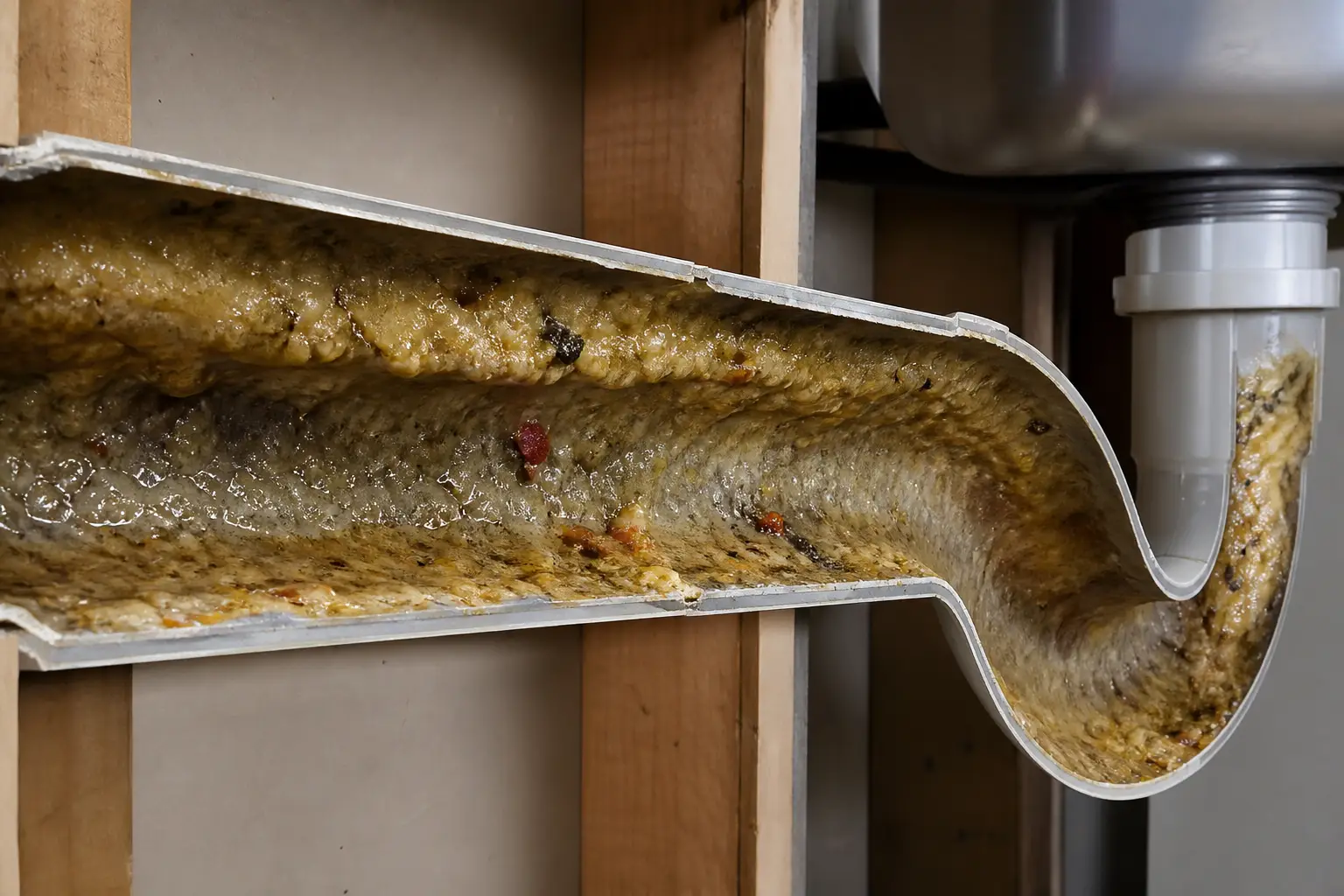
Water still gets through.
Just not as easily as it did on the day before Memorial Day.
By August, the clog has finally reached the point where your plumbing can no longer hide it.
Houston’s Summer Lifestyle Doesn’t Do Your Drains Any Favors
Summer simply asks more of your plumbing.
Kids are home from school. Friends come over for cookouts. The dishwasher seems to run constantly after weekends spent grilling burgers and briskets.
Fresh fruits and vegetables become part of almost every meal. Watermelon rinds, corn husks, celery, onion skins, pasta, rice, and cooking grease all have a way of finding themselves headed toward the sink, on their way to the garbage disposal.
The disposal may grind many of those items into smaller pieces, but it doesn’t magically make them disappear. Overworking your garbage disposal will eventually lead to its failure, requiring repair or replacement.
Grease deserves special attention.
Many homeowners believe running hot water after pouring grease down the drain solves the problem. Unfortunately, it usually just moves the grease a little farther down the pipe before it cools, hardens, and begins collecting everything else flowing through your plumbing.
By late summer, those small deposits have often become significant restrictions.
Houston Reality Check
August doesn’t magically create drain clogs.
It simply exposes the months of grease, soap residue, food particles, hair, and heavy summer water use that have been quietly building inside your plumbing since the weather first warmed up. That’s why so many Houston homeowners suddenly notice slow drains just as summer begins winding down.
Don’t Forget About Your AC’s Drain Line
Not every drain problem happens under a sink.
You may not know this, but all summer, your air conditioner has been quietly producing gallons of water every day since you turned it on, directing all that moisture through a small (3/4" internal diameter) condensate drain line.
Like any drain, that line can develop algae, biofilm, and debris over time.
By August, it’s been draining almost nonstop for months. If it becomes clogged, the water has nowhere to go except back into the drain pan—and eventually overflows onto the ceiling below, while also getting inside your walls and destroying drywall and insulation. If the drain line backup continues for too long, you’ll probably need to look into new flooring as well. All because no one checked on the one drain that, with a cleaning, could have prevented all of that mess.
It’s one of the most common summertime service calls in Houston because homeowners don’t think about it until water starts showing up where it shouldn’t.
Your AC condensate drain may be small, but if it’s neglected, it can cost you well into the five figures to replace the same that small drain can cause.
Make sure that your condensate drain line receives the same attention as every other drain in your home.
Older Plumbing Systems Often Show Their Age in August
If your home is in one of Houston’s historic districts, like the Heights or Montrose, where most homes are several decades old, with some that have entered into their second century, late summer can expose plumbing issues that newer systems don’t tend to experience.
Older drain lines will probably have years of grease buildup inside them.
As tree roots search for moisture throughout the year, they can gradually work their way into aging sewer lines through tiny cracks or loose fittings and pipe joints.
Houston’s clay soil also expands and contracts as weather conditions change, placing additional stress on both home foundations and underground piping over time.
None of these problems suddenly appear in August.
Like grease buildup, they’ve usually been developing quietly for months—or even years.
August is simply when enough demand is placed on the plumbing system for those hidden issues to finally become noticeable.
How to Tell the Difference Between a Slow Drain and a Bigger Problem
A single slow sink is often just that.
But if multiple drains throughout your home begin acting up around the same time, it’s worth paying closer attention.
Watch for warning signs like:
- Multiple slow drains.
- Gurgling sounds after using another fixture.
- Water backing up into tubs or showers.
- Unpleasant sewer odors.
- Toilets bubbling after running water elsewhere in the house.
Those symptoms can point to a blockage deeper within the plumbing system rather than a simple clog near one fixture.
The earlier those issues are identified, the easier they often are to address.
Don’t Wait Until the Drain Stops Completely
One of the biggest mistakes homeowners make is assuming a slow drain isn’t really a problem because water eventually disappears.
Eventually isn’t the goal.
Freely flowing at all times is.
A drain that’s slowing down is giving you advance notice that a buildup is developing somewhere inside the pipe. Addressing it early may be as simple as removing a localized blockage or professionally cleaning the line before it becomes completely obstructed.
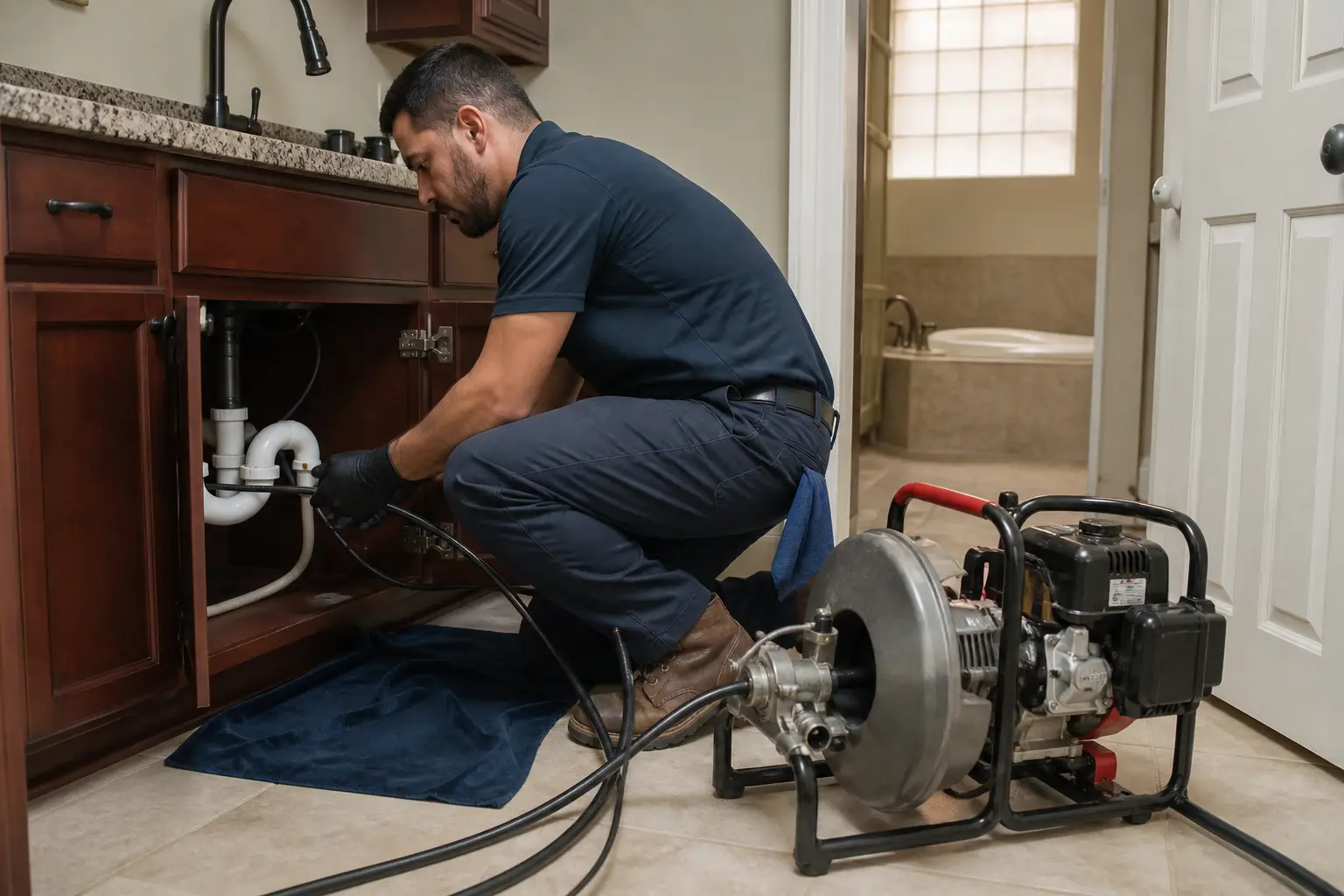
Waiting until nothing drains often means dealing with standing water, backups in other plumbing fixtures, and a much less convenient repair.
If your drains have been slowing down as August wears on, the licensed, experienced plumbers from Nick’s Plumbing can quickly identify what’s causing the restriction and recommend the most effective solution before a minor inconvenience turns into a major plumbing headache.
Free estimates are available for qualifying work, every repair is backed by our 90-day warranty, and you can schedule service by calling (713) 868-9907.
Frequently Asked Questions
Why do my drains always seem to clog in late summer?
Late summer often marks the point when months of grease, soap residue, food debris, and heavy household water use have accumulated enough to noticeably restrict drainage.
Is pouring hot water down the drain enough to remove grease?
Hot water may temporarily move softened grease farther down the pipe, but it doesn’t eliminate grease buildup that’s already coating the inside of the drain line. Over time, that grease continues accumulating additional debris, which will eventually create a serious blockage in that line.
Can my air conditioner’s drain line clog too?
Yes. AC condensate drain lines frequently develop algae and biofilm during Houston’s long cooling season. A clogged condensate drain can eventually cause water damage inside your home.
When should I call a plumber for a slow drain?
If multiple fixtures are draining slowly, water is backing up, you notice sewer odors, or the problem keeps returning after DIY attempts, it’s time to have the drain professionally inspected.
Slow Drains Showing Up This August?
Nick’s Plumbing can find what’s restricting the line and clear it before a slow drain becomes a full backup.
Call Now: (713) 868-9907 Schedule Online
Drain Cleaning • Clogged Sink Repair • Garbage Disposal Service