Water stains don’t usually appear the day the problem starts.
They show up the day your drywall finally decides it’s had enough.
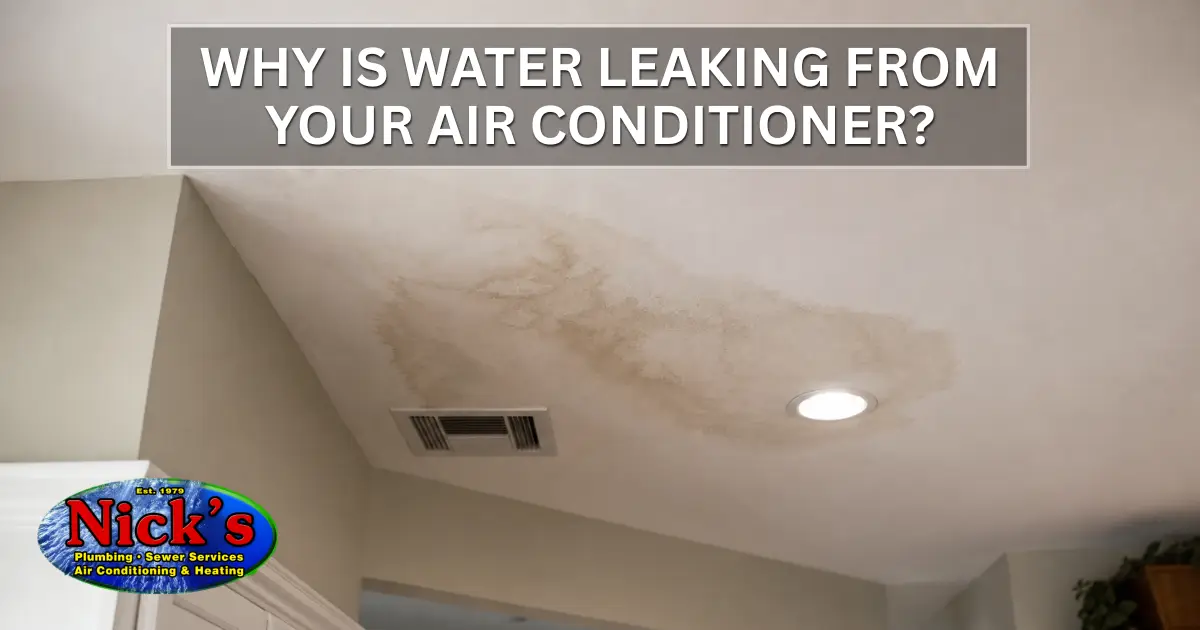
Then one afternoon, you notice a faint, darkening ring forming in the kitchen ceiling’s paint that wasn’t there last week. Naturally, most homeowners will immediately assume the air conditioner itself is leaking.
In reality, the culprit is usually much simpler.
There is a drain that has stopped draining.
Here in Houston, where air conditioners essentially run nonstop from late March well into November, clogged condensate drain lines are one of the most common summertime service calls we receive.
The good news is that the repair is relatively simple. The bad news is that waiting too long can turn a simple plumbing issue into expensive water damage inside your home.
Your Air Conditioner Is Constantly Generating Water
One of the biggest surprises for homeowners is learning that an air conditioner doesn’t just cool your home.
It also removes humidity. As warm, humid air passes over the cold evaporator coil inside your system, moisture condenses into water—just like a cold glass of sweet tea sweating on a July afternoon.
That water has to go somewhere.
If all goes as planned, the water collects in a drain pan before flowing through into a condensate drain line—usually a narrow PVC pipe that carries the water safely outside the home, or directs it into your home’s plumbing and drainage system.
If that water evacuation doesn’t go as planned… that’s when ceilings, drywall, flooring, and insulation can all be sucked into the vortex of this problem.

Your AC Condensate Drain Line Is Actually Part of Your Home’s Plumbing System!
Where most people would categorize this as an air conditioning repair, the drain itself functions much like any other drainage system in your home. Its job is simple. Carry water away.
The AC condensate drain line relies on gravity, proper slope, and an unobstructed path from the AC drain pan to the line and into your main plumbing drain to keep that rapidly accumulating water moving.
Naturally, Houston’s sub-tropical climate creates the perfect conditions for buildup inside that pipe. Houston practically provides algae with a starter kit: warm temperatures, constant moisture, darkness inside the pipe, airborne dust, and plenty of organic material for biofilm to feed on.
It doesn’t take long for algae and biofilm to begin coating the inside walls of the drain line. As that buildup thickens, the opening narrows until water can no longer enter the home’s drainage system freely.
The plumbing hasn’t broken. It has simply become blocked.
For a deeper look at why this happens every summer—and what to do when it does—see our companion post: Why Your AC Drain Line Clogs Every Summer in Houston (And What to Do When It Does).
Why Houston Makes This Problem Worse
Living in Houston means living with humidity. Even on days that don’t feel especially hot, the air still carries excessive moisture. Your air conditioner spends months pulling that moisture out of your home around the clock. So, by late July or August, your condensate drain has already been working overtime for months.
The clog didn’t suddenly appear overnight. It has probably been slowly developing since the cooling season began. Houston’s long summers push it past the tipping point.
That’s why so many homeowners discover the problem in the middle of August rather than April: summers are when the drain finally reaches its limit.
What Happens If You Ignore It?
One reason clogged condensate drains catch homeowners off guard is that the air conditioner will usually keep cooling the house as normal, while the damage quietly progresses behind the scenes.
The thermostat still drops.
Cool air still comes out of the vents.
Everything appears normal—until it doesn’t.
By the time that water spot on the ceiling becomes visible, water may already have been collecting in the drain pan or overflowing into places it was never intended to reach for weeks.
Depending on where your indoor unit is located, that can lead to:
- Brown water stains on ceilings or walls.
- Saturated attic insulation that loses much of its insulating value.
- Soft or sagging drywall that eventually requires replacement.
- Warped hardwood flooring or damaged baseboards.
- Mold and mildew growth caused by prolonged moisture.
Ironically, the air conditioner itself should be perfectly repairable if there are no other problems apparent with the unit. And the actual repair to fix the blocked drain is simple and inexpensive; the real heartbreaker is the collateral damage a leak like this can leave behind.
When sheetrock, insulation, and support studs are soaked, the damaged structural building materials and their installation are always the most expensive part of the repair.
Can You Fix It Yourself?
DIY Disclaimer: These tips are general guidance—not a substitute for a professional inspection. Every home and system is different. Nick’s Plumbing & Air Conditioning is not liable for any damage or injury resulting from DIY attempts. If something doesn’t look right, stop and call us at 713-868-9907.
Sometimes.
If you know where your condensate drain cleanout is, pouring a cup of distilled white vinegar down the line every month or two can help discourage algae and biofilm buildup during Houston’s long cooling season.
Some homeowners also have success using a wet/dry vacuum at the outdoor end of the drain line to clear a blockage.
Those are both reasonable maintenance practices.
What isn’t a good idea is continuing to pour chemicals into the line, forcing objects through the pipe, or repeatedly resetting the system if the overflow safety switch keeps shutting it off.
If water is already backing up into the drain pan—or you’ve noticed ceiling stains, wet drywall, or recurring leaks—the problem has moved beyond simple preventive maintenance.
That’s the right time to call a professional.
Should You Call a Plumber or an HVAC Technician?
Honestly?
Most homeowners shouldn’t have to figure that out.
A clogged condensate drain sits right at the intersection of plumbing and air conditioning. The water comes from your AC system, but it’s carried away through a drain that functions like the rest of your home’s plumbing.
That’s why this problem creates so much confusion.
Some companies specialize in HVAC equipment.
Others only handle plumbing.
At Nick’s Plumbing & Air Conditioning, you don’t have to guess which truck to request. We’ll identify the source of the problem, clear the blockage, inspect the drain line and drain pan, verify the float switch is operating correctly, and let you know if we find anything else that could cause the issue to return.

The Best Repair Is the One You Never Have to Make
Houston’s humidity isn’t going anywhere.
Neither are the gallons of condensation your air conditioner removes every day during another Gulf Coast summer.
The good news is that clogged condensate drains are also one of the easier problems to prevent.
Routine maintenance allows the drain line to be inspected and cleaned before algae, slime, and debris have a chance to block the pipe completely. Small maintenance visits today can prevent major drywall repairs tomorrow.
It’s one more reason homeowners choose Nick’s VIP Maintenance Plan. Along with two annual HVAC tune-ups, members receive unlimited service calls during normal business hours with no trip charge, 10% off repairs, priority scheduling, and ongoing system monitoring that helps identify problems before they become emergencies.
Because preventing water damage is almost always less expensive than repairing it.
Frequently Asked Questions
Why is my air conditioner leaking water inside my house?
The most common cause is a clogged condensate drain line. As your air conditioner removes humidity from the air, that water normally drains away through a PVC pipe. When the line becomes blocked by algae or debris, the water backs up and can overflow into your home.
Can a clogged AC drain line damage my ceiling?
Yes. If the drain pan fills and overflows, water can soak drywall, insulation, framing, and ceiling materials. Catching the clog early is one of the best ways to avoid expensive water damage.
Should I pour bleach or vinegar into my condensate drain?
Most HVAC professionals recommend distilled white vinegar over bleach. Vinegar helps slow algae growth without the corrosion concerns that concentrated bleach can create around certain HVAC components.
Is an AC drain line considered plumbing?
While it’s connected to your air conditioning system, the condensate drain functions much like any other drainage pipe in your home. Its purpose is to carry water safely away from the equipment.
How much does it cost to clear a clogged condensate drain?
The exact cost depends on the severity of the blockage and whether any additional repairs are needed. Nick’s Plumbing & Air Conditioning provides a free estimate before any work begins, so you’ll know exactly what to expect before the first screwdriver turns.
Your Air Conditioner Should Cool Your Home—Not Water Your Drywall
A clogged condensate drain line may seem like a small problem, but left alone, it can damage ceilings, flooring, insulation, and walls long before the air conditioner itself stops working.
If you’ve noticed water where it doesn’t belong, don’t wait for a ceiling stain to become a remodeling project.
Call Nick’s Plumbing & Air Conditioning at 713-868-9907 to schedule your free estimate today. Our experienced technicians will identify the problem, explain your options, and get your system draining properly again. Our 90-day workmanship warranty covers every qualifying repair, so you can be confident the job was done right the first time.
AC Leaking Water? We’ll Find the Real Problem.
Free estimate before any work begins—and because we handle both plumbing and HVAC, you don’t have to guess who to call. Serving Houston and surrounding areas since 1979.
Call Now: (713) 868-9907 Schedule Online
Drain Cleaning • Plumbing Repair • VIP Maintenance