Houston’s older neighborhoods have a charm you can’t replicate.
The Heights. Montrose. Germantown. Freeland. Woodland Heights. Eastwood. Riverside Terrace. Lindale Park. Brooke Smith. Southwood. Idylwood.
These are neighborhoods that have survived hurricanes, floods, droughts, freezes, and generations of Houston families. Many have been beautifully restored, with updated kitchens, modern bathrooms, and brand-new HVAC systems.
But beneath those lovingly maintained homes lies something most homeowners rarely think about.
The underground sewer line.
Unlike your roof or air conditioner, your sewer line doesn’t get replaced simply because it’s getting older. It stays buried, quietly carrying wastewater away from your home year after year, until the one day it doesn’t.
And that’s only one reason that an annual sewer camera inspection is becoming an increasingly valuable investment for homeowners living in Houston’s historic neighborhoods.
If Your Home Is 100 Years Old, Most of Your Plumbing Is, Too
It certainly speaks not only to the quality of the parts and materials used at that time, but also to the skills these earliest residential plumbers possessed. I’m almost certain that the people who actually laid the pipe, did the welding, and installed these original faucets and fixtures in the 1920s would never have expected their work to still be in use in 2026.
Now, as impressive as the design and installation of Houston’s plumbing system was for its time, many older homes still contain portions, if not complete systems, of their original plumbing. And that’s bad news.
The secret sauce for galvanized steel water supply lines was a protective zinc coating that worked as a barrier against rust and corrosion. This feature helped make galvanized steel water supply pipes the gold standard from coast to coast, with almost all new homes built from the 1920s through the early 1970s.
It’s rare, but there are also plumbing systems that use cast-iron or vitrified clay sewer lines buried beneath the property. Those materials performed remarkably well for their time, but again, they were never designed to have an active lifespan exceeding 100 years of continuous use.
Time affects everything underground.
Pipe joints loosen.
Cast iron eventually corrodes.
Clay pipes can crack.
Tree roots discover tiny openings and use your sewer line as their water source.
Bear in mind, all of this continues happening completely out of sight. Just because you can’t see your sewer line doesn’t mean time has stopped affecting it.
Houston’s Soil Never Stops Moving
If underground pipes only had to deal with age, many would probably last even longer.
Houston gives them another challenge, our expansive clay soil.
During long periods of hot, dry weather, the soil shrinks as moisture evaporates until we’re hit with an afternoon downpour that soaks the earth in a matter of hours.
So, the clay expands, and as soon as the storm is over, evaporation begins and continues until the next soaking rainstorm.
The cycle repeats itself year after year.
Over decades, that constant movement places tremendous stress on underground sewer pipes.
Older sections of pipe may shift slightly out of alignment. Joints can separate. Sections may sag enough to collect wastewater rather than allow it to flow freely. Small cracks gradually become larger ones.
The pipe didn’t suddenly fail.
It fought the battle against Houston’s soil for more than a century.
The One Thing Homeowners Usually Get Wrong
Most homeowners think sewer line problems begin the day they notice them.
In reality, that’s usually the day the problem finally becomes impossible to ignore.
That small crack in the sewer line may have formed years ago. Then a tiny tree root found its way inside. More roots followed. Grease and debris began catching on those roots. The opening gradually became smaller. Water still drained.
Until one day…
It didn’t.
Sewer line problems are almost always a story of gradual deterioration, not sudden failure.
Tree Roots Never Stop Looking for Water
Houston’s long growing season is wonderful for trees.
It’s an absolute hellscape for underground plumbing.
Tree roots naturally seek out moisture. Even the smallest crack or loose pipe joint can release enough moisture vapor to attract nearby roots. Once roots find their way into a sewer pipe, they settle in, get comfortable, and continue to grow.
Before long, the inside of your sewer line looks like a subtropical rain forest until it begins trapping toilet paper, grease, food particles, and other debris flowing through the line.
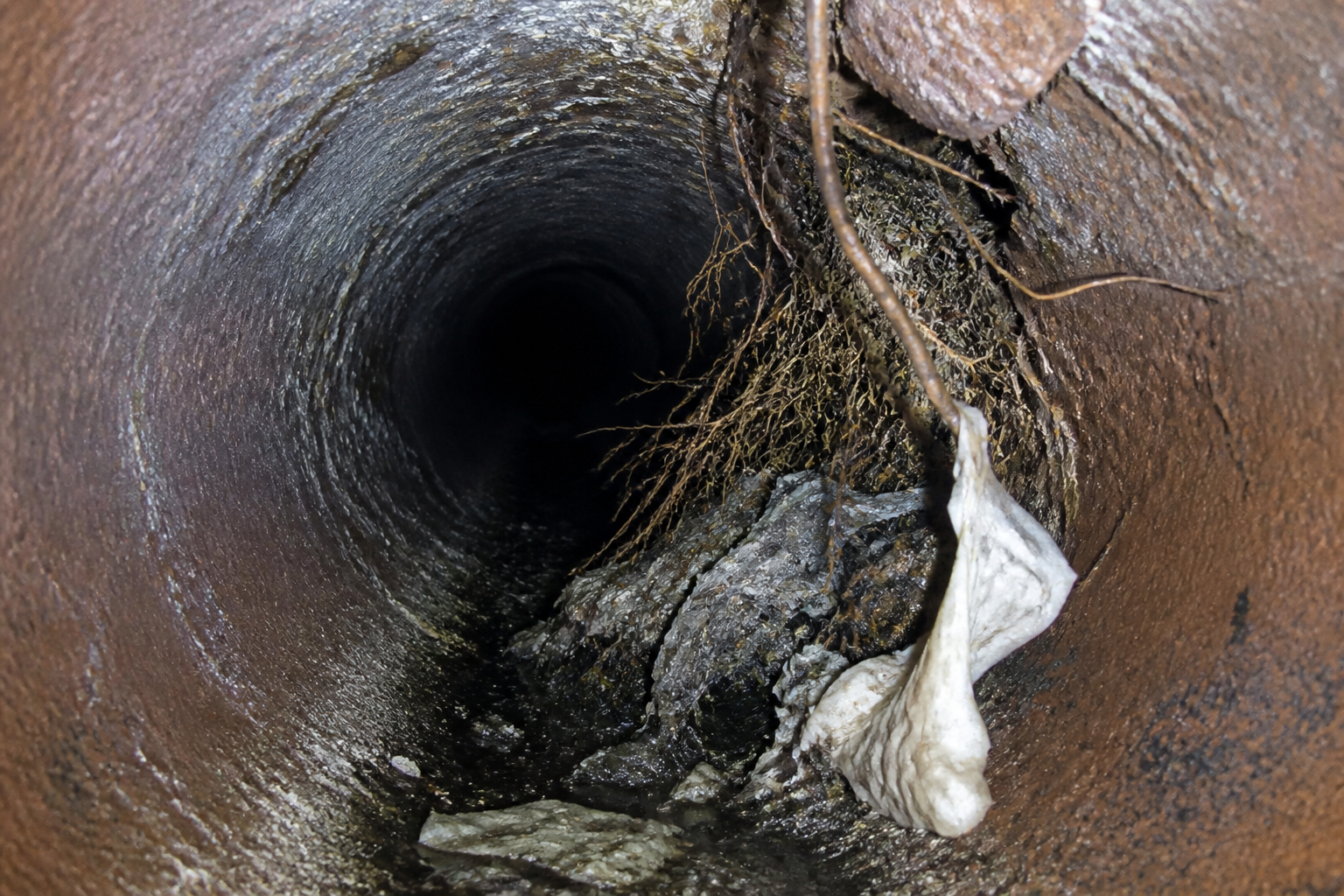
The roots didn’t create the entire clog.
They built the perfect net.
By the time slow drains appear inside your home, the blockage has probably been developing for months.
Houston Reality Check
Many homes in neighborhoods like The Heights and Montrose have undergone multiple remodels over the decades. The kitchen may be brand new, the bathrooms may be completely updated.
Now, the sewer line under the front yard, that’s probably several generations older than all the shiny new fixtures and the people using them today.
Out of sight shouldn’t mean out of mind. Sewer lines are under a constant threat from tree root infiltration, breakage, corroded fittings, and age. An annual inspection with a high-definition snake camera allows your technician to actually see everything inside your sewer line. Thanks to the sewer line camera, things like broken fittings, sewer line bellies, and tree-root infiltration caused by soil shifting are no longer dirty secrets hidden underground.
Warning Signs Your Sewer Line May Be Trying to Get Your Attention
Sewer line problems rarely stay quiet forever.
Watch for symptoms like:
- Multiple drains slowing down at the same time.
- Toilets that gurgle after another fixture is used.
- Water backing up into tubs or showers.
- Frequent drain clogs, or slow drains throughout the house.
- Sewer odors inside or outside your home.
- Wet or unusually green patches of grass in the yard.
- Standing water near your sewer cleanout after heavy rain.
One slow sink may have a localized clog. Several plumbing fixtures acting up simultaneously often point to a bigger issue somewhere deeper in the system.
What Happens If You Ignore a Damaged Sewer Line?
A damaged sewer line rarely repairs itself. As a matter of fact, it usually tends to do the opposite.
Small cracks become larger openings.
Tree roots continue to grow, narrowing the route your wastewater has to take.
Grease and debris continue accumulating.
Eventually, wastewater will begin backing up into your home rather than flowing into the city sewer system.
Beyond the inconvenience, untreated sewer line problems can contribute to soil erosion beneath portions of your property, unpleasant odors, recurring plumbing backups, insect activity, mold growth from repeated moisture intrusion, and increasingly expensive repairs.
The earlier a problem is identified, the more repair options homeowners often have available.
Protect the Above-Ground Charm by Caring for What’s Below It
Older Houston homes have stories. Some are written in original hardwood floors. Others live in handcrafted trim, antique brickwork, stained glass, and front porches that have welcomed families home for generations.
Another part of that story is buried beneath your yard.
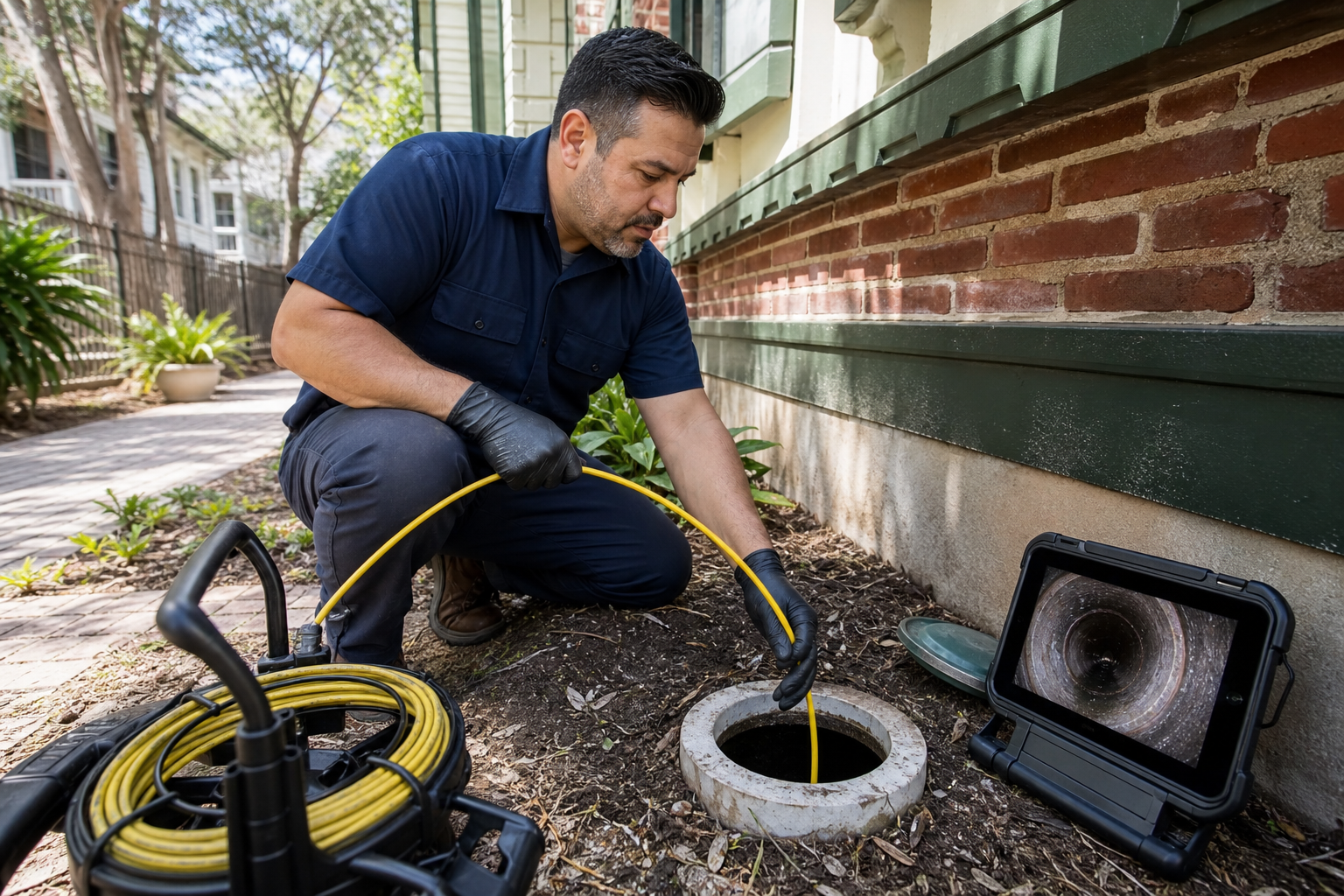
An annual sewer camera inspection helps ensure that the plumbing infrastructure supporting your historic home continues to do its job for years to come.
If your home is older and you haven’t had your sewer line inspected or cleaned recently, the licensed plumbers at Nick’s Plumbing & Air Conditioning will perform a sewer line camera inspection to identify potential problems before they require major repairs.
Free estimates are available for qualifying work, our 90-day warranty backs every repair, and you can schedule an appointment by calling (713) 868-9907.
Frequently Asked Questions
How often should an older Houston home have a sewer camera inspection?
Many plumbing professionals recommend annual inspections for older homes, especially if the property has mature trees, aging sewer lines, or a history of recurring drain problems.
What types of sewer pipes are common in older Houston homes?
Many older homes still have cast-iron or vitrified clay sewer lines, while galvanized steel was commonly used for water supply piping. All of these materials can deteriorate with age.
Can tree roots really damage sewer lines?
Yes. Tree roots naturally seek out moisture and can enter sewer lines through tiny cracks or loose joints. Once inside, they continue growing and often create significant blockages.
What are the warning signs of a damaged sewer line?
Common symptoms include multiple slow drains, recurring clogs, gurgling toilets, sewer odors, wet areas in the yard, unusually green grass, and wastewater backing up into tubs or showers.
Own an Older Houston Home?
Nick’s Plumbing can run a sewer camera inspection and catch roots, cracks, and soil damage before they become a backup.
Call Now: (713) 868-9907 Schedule Online
Sewer Camera Inspection • Drain Cleaning • Sewer Line Repair